先圣之道
Ways of Ruling by ancient Sages
文王问太公曰:“先圣之道,可得闻乎?”太公曰:“义胜欲则昌,欲胜义则亡;敬胜怠则吉,怠胜敬则灭。故义胜欲者王,怠胜敬者亡。”
-姜尚《六韬-文韬》【註】
King Wen of the Zhou Dynasty asked Tai Gong, "May I know the ways of ruling by ancient sages?" Tai Gong answered, "When righteousness overcomes avarice, the country will be prosperous and strong; when avarice surpassess righteousness, the country will be subjugated. When diligence overcome laziness, the country will be auspicious and propitious; when laziness surpasses diligence, the country will be weakened and perish. Therefore the government that let righteousness prevail over avarice will rule successfully, and the country where laziness prevail over diligence will be subjugated ."
Jiang Shang: 《Six Secret Strategies-Civil Strategies-On Doctrine of Clarity》
民为邦本,本固邦宁。 --姜尚《六韬·文韬》
The people are the foundation of the state; when the foundation is secure, the state is at peace.
将者,智、信、仁、勇、严也。智以知事,信以使人,仁以安民,勇以决战,严以整众。 ——姜尚《六韬·龙韬》
A general must possess wisdom, trustworthiness, benevolence, courage, and strictness. Wisdom understands affairs, trust wins people’s service, benevolence pacifies the people, courage decides battles, and discipline unites the troops.
将之所贵者,知人也。用人不疑,疑人不用。 --姜尚《六韬·虎韬》
The highest virtue of a general is the ability to know men. When you employ a man, do not doubt him; when you doubt a man, do not employ him.
以正合,以奇胜。将贵于静,兵贵于精。——《六姜尚韬·兵韬》
Engage the enemy with the orthodox, and win with the unorthodox. A general is valued for calmness; troops are valued for excellence.
智者虑远,仁者虑深。 —姜尚《六韬·文韬》
The wise think far ahead; the benevolent think deeply within.
将之道,静以制动,柔以制刚。—姜尚《六韬·虎韬》
The general’s way is to control movement through stillness, and overcome hardness with softness.
【註】
《六韬》又称《太公六韬》或《太公兵法》,周朝的姜尚著。此书成于战国时代。全書以問答形式呈現,以周武王設問、姜太公答之,來探討各種古代軍政議題。1972年4月,在山東臨沂銀雀山西漢古墓中,發現了大批竹簡,其中就有《六韜》的五十多枚,證明《六韜》至少在西漢時已廣泛流傳。《六韜》是一部集先秦軍事思想之大成的著作,論述治國、治軍和指導戰爭的理論、原則,對後代的軍事思想有很大的影響,被譽為是兵家權謀類的始祖。《六韜》在16世紀傳入日本,18世紀傳入歐洲,現今已翻譯成日、法、朝、越、英、俄等多種文字。 《六韜》共分六卷: 文韜; 武韜; 龍韜; 虎韜; 豹韜; 犬韜。
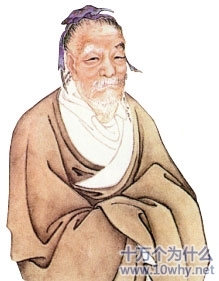 文中太公就是姜太公,又稱姜子牙、姜尚,商末周初人生于公元前1156,死于公元前1017年,寿至139岁。他先后辅佐了六位周王,因是齐国始祖而称“太公望”,俗称姜太公。西周初年,他被周文王封为“太师”(武官名),被尊为“师尚父”,辅佐文王。后辅佐周武王灭商。因功封于齐,成为周代齐国的始祖。 文中太公就是姜太公,又稱姜子牙、姜尚,商末周初人生于公元前1156,死于公元前1017年,寿至139岁。他先后辅佐了六位周王,因是齐国始祖而称“太公望”,俗称姜太公。西周初年,他被周文王封为“太师”(武官名),被尊为“师尚父”,辅佐文王。后辅佐周武王灭商。因功封于齐,成为周代齐国的始祖。
他是中国历史上杰出的政治家、军事家和谋略家。汉姜子牙出世时,家境已经败落了,所以姜子牙年轻的时候干过宰牛卖肉的屠夫,也开过酒店卖过酒,聊补无米之炊。但姜子牙人穷志不短,无论宰牛也好,还是做生意也好,始终勤奋刻苦地学习天文地理军事谋略,研究治国安邦之道,期望能有一天为国家施展才华。虽然他满腹经纶、才华出众,但在商朝却怀才不遇。他已年过六十,满头白发,仍在寻机施展才能与抱负。后竟遇文王,佐周灭商,成就功业。
是周文王興國、武王克商的首席謀臣、西周的開國元勳,也是齊文化的創始人。歷代典籍都公認他的歷史地位,道、儒、法、兵、縱橫諸家皆追他為本家人物,被尊為「百家宗師」。據說,他還是中國最早的預言《乾坤萬年歌》的作者。
Note:
《The Six Secret Strategies》 (《六韬》), also known as 《The Six Secret Strategies of the Grand Duke》 or 《The Grand Duke’s Art of War》, is attributed to Jiang Shang of the Zhou dynasty. The book was compiled during the Warring States period. It is presented in the form of a dialogue, with King Wu of Zhou posing questions and the Grand Duke (Jiang Shang) providing answers, discussing various ancient issues of governance and military affairs.
In April 1972, a large number of bamboo slips were unearthed from a Western Han tomb at Yinqueshan in Linyi, Shandong Province. Among them were more than fifty slips of 《The Six Secret Strategies》, proving that the text was already widely circulated at least as early as the Western Han Dynasty.
《The Six Secret Strategies》 is regarded as a comprehensive collection of pre-Qin military thought. It expounds on theories and principles of statecraft, military organization, and the conduct of war. It had a profound influence on later generations of military thought and is honored as the progenitor of the “strategy and power” branch of military writings. The work was introduced to Japan in the 16th century, to Europe in the 18th century, and has since been translated into Japanese, French, Korean, Vietnamese, English, Russian, and many other languages.
The text consists of six scrolls:
-
Civil Strategies
-
Military Strategies
-
Dragon Strategies
-
Tiger Strategies
-
Leopard Strategies
-
Dog Strategies
In the text, the “Grand Duke” refers to Jiang Taigong, also known as Jiang Ziya or Jiang Shang,born in 1156 BCE and passing away in 1017 BCE at the age of 139. He served as an advisor to six Zhou kings. As the founding ancestor of the state of Qi, he was called Taigong Wang (太公望), commonly known as Jiang Taigong. In the early Western Zhou, King Wen of Zhou appointed him as Grand Preceptor (a military office) and honored him as Grand Preceptor Shangfu, entrusting him with assistance in governance. Later, he aided King Wu of Zhou in overthrowing the Shang dynasty. For his merits, he was enfeoffed in Qi, becoming the founding ruler of the Zhou-era state of Qi.
Jiang Shang was an outstanding statesman, military strategist, and master of strategy in Chinese history. By the time he was born, his family had already fallen into decline. In his youth, he worked as a butcher slaughtering cattle and selling meat, and also opened a tavern selling wine, just to make a living. Yet despite his poverty, he never gave up his ambition. Whether butchering cattle or running a business, he was always diligent in studying astronomy, geography, military strategy, and the arts of statecraft, hoping to serve the country with his talents one day .
Despite his erudition and extraordinary abilities, he was not recognized in the Shang dynasty and remained a frustrated scholar even into his sixties, with white hair yet still searching for an opportunity to realize his ambitions. Eventually, he encountered King Wen of Zhou, whom he assisted in building up the Zhou state and, later, King Wu in conquering the Shang. In this way, he achieved lasting renown.
He was the chief strategist behind King Wen’s rise and King Wu’s conquest of Shang, a founding hero of the Western Zhou, and the initiator of Qi culture. His historical status is widely acknowledged in classical texts. He was claimed by Daoist, Confucian, Legalist, Military, and Diplomatic schools alike as one of their own, and revered as the “Grand Master of the Hundred Schools.” He is also said to have been the earliest author of a prophetic poem, 《The Song of Heaven and Earth for Ten Thousand Years》.

|









.jpg)
