

|
|
|
|---|
 |
 |
 |
 |
 |
|
 |
|---|
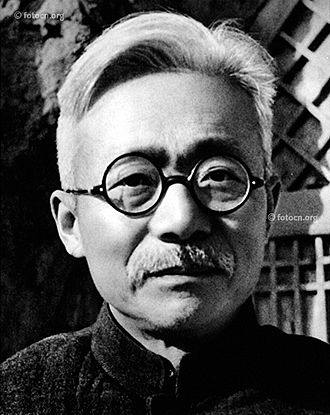
1917年11月7日(俄历10月25日),俄国十月革命的隆隆炮声震撼了世界,人类历史从此进入一个新的纪元。此时,远在湖南护法战场上转战的林伯渠,从挚友李大钊的来信中获悉了这一消息,感到无比振奋,透过茫茫的历史迷雾,一个新的希望从他的心头升起。早在此之前,林伯渠就对孙中山领导的旧民主主义革命进行了严肃认真的思考,并开始了新的探索。20多年后,他在自传中曾这样深情地回顾这一历史:“从同盟会起到民国成立之后10年中,自己亲自参加了每个阶段的民族民主的革命斗争,经过了多少的挫折失败,也流尽无数志士的鲜血,然而反动势力仍然是此起彼伏地统治着中国,政局的澄清总是那样遥远无期。虽然对于造成这种形势的真正原因还不完全了解,但总觉得不能再重复过去所走过的道路,应该从痛苦的经验中摸索出一条新路。究竟怎样的干下去才能把革命贯彻到底呢。” 李大钊的来信启发了他,十月革命的伟大胜利鼓舞了他。1918年春,他以热情洋溢的笔调写下了这首欢呼历史开启世界新时代的诗篇。 Notes: ① Chen-Heng refers to Chenzhou and Hengyang in Hunan Province. ② The Constitutional Protection Movement (Hufa Campaign): In July 1917, after Beiyang warlord Duan Qirui took control of the Beijing government by using force to expel monarchist Zhang Xun, he implemented a feudal autocratic dictatorship at home, aligned with Japanese imperialism abroad, abolished the Provisional Constitution drafted under the leadership of Sun Yat-sen after the 1911 Revolution, and refused to reinstate the National Assembly. This provoked nationwide opposition. Upholding the position of democratic revolution, Sun Yat-sen resolutely raised the banner of “Constitutional Protection” in Guangzhou, established the Constitutional Protection Military Government, convened an “Extraordinary Parliament,” and launched the Constitutional Protection War against Duan Qirui. Introduction to the poet: Lin Boqu (March 20, 1886 – May 29, 1960), originally named Lin Zuhan, courtesy name Suiyuan, style name Boqu, was a native of Liangshuijing Village, Xiumei Town, Anfu (today’s Linli County), Hunan Province. In his early years he joined the Chinese Revolutionary Alliance (Tongmenghui), and in 1921 he became a member of the Chinese Communist Party. He was one of the outstanding leaders of the Communist Party of China and the People’s Republic of China. Lin Boqu took part in the Nanchang Uprising, the Long March, and other major revolutionary events, and served as Chairman of the Shaanxi–Gansu–Ningxia Border Region Government. After the founding of the People’s Republic of China, he was appointed Secretary-General of the Central People’s Government Committee and Vice Chairman of the Standing Committee of the First and Second National People’s Congresses. Lin Boqu was a renowned proletarian revolutionary and statesman, and one of the important leaders of the Party and the state. Together with Dong Biwu, Xu Teli, Xie Juezai, and Wu Yuzhang, he was known as one of the “Five Elders of Yan’an.” On May 29, 1960, Comrade Lin Boqu passed away in Beijing at the age of 74. On November 7, 1917 (October 25 by the old Russian calendar), the thundering cannons of the Russian October Revolution shook the world, ushering humanity into a new epoch of history. At that very time, Lin Boqu, who was fighting on the Hunan battlefield in the movement to protect the Provisional Constitution, learned of this news from a letter written by his close friend Li Dazhao. He was profoundly inspired; through the dense mists of history, a new hope rose in his heart. Even before this, Lin Boqu had already been seriously reflecting on the old democratic revolution led by Sun Yat-sen and had embarked on a new search. More than twenty years later, he recalled these experiences with deep emotion in his autobiography:
Li Dazhao’s letter enlightened him, and the great victory of the October Revolution gave him encouragement. In the spring of 1918, with fervent enthusiasm, he wrote the above poem hailing the dawn of a new era in world history.
|
|
|---|
| Contact 联系 | Last Revised
09/26/2025
| |

.jpg)
