朱德诗三首
Three Poems by Zhu De
1. 寄语蜀中父老
(1939年)
伫马太行侧,
十月雪飞白。
战士仍衣单,
夜夜杀倭贼。
1. To My Folks in Sichuan
(1939)
Garrisoned by the Taihang Mountain,
October sees white snow flying.
Our soldiers are still thinly cladded,
They're fighting Jap foes day and night.
2. 赠友人【註1】
(1941年)
北华收复赖群雄,
猛士如云唱大风【註2】。
自信挥戈能退日,
河山依旧战旗红。
2. To Friend
(1941)
It's myriad of heroes who recovered the northern part of China,
Innumerable valiant warriors sing the victory tune of "Great Wind".
Wielding our spears we are confident in defeating the Japs,
With red battle flags flying our motherland remains charming as ever.
3. 出太行
(1940年5月)
群峰壁立太行头,
天险黄河一望收。
两岸烽烟红似火,
此行当可慰同仇。【註3】
3. On Journey Out of Taihang Mountain
(May 1940)
At the head of Taihang, peaks tower steep,
The natural barriers of the Yellow River fall within sight.
Red flames of war blaze on both sides of the waters,
This journey will console our comrades and friends. |
【註1】朱和平在《永久的记忆·战火中的情缘》中谈到此诗:1939年,爷爷五十三岁生日是在太行前线过的,山西武乡县王家峪村八路军总部所在地的军民们纷纷前来祝贺。作家杨朔写了一首盛赞爷爷的诗。为表示谢意,爷爷步杨朔原韵复诗一首。杨朔原诗:《寿朱德将军》“立马太行旌旗红,雪云漠漠飒天风。将军自有臂如铁,力挽狂澜万古雄。”
【註2】《大風歌》是漢朝開國皇帝高祖劉邦,在公元前195年初平定英布之亂後,回到故里沛縣,在宴請鄉鄰的酒宴上,酒酣耳熱之餘,擊築而歌,《大風歌》由此問世。後以其開頭兩字大風命名,大風歌氣魄恢弘,流傳千古。其歌詞:“大風起兮雲飛揚
威加海內兮歸故鄉
安得猛士兮守四方。”
【註3】 《出太行》 作品背景介紹:
此行当可慰同仇
—【回忆录摘要】记朱总司令出太行山
牧雨轩
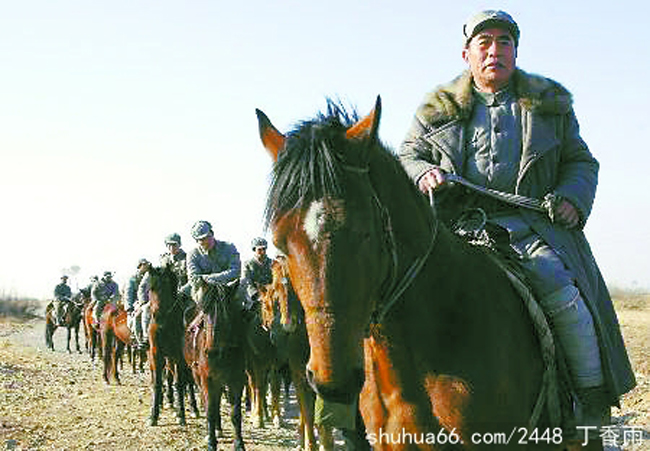 一九四O年春,国民党内的投降倾向日益严重,党中央尽一切可能争取蒋介石集团继续抗战,便决定朱总司令亲自赴洛阳,同国民党第一战区长官卫立煌就国共停止磨擦、团结抗战进行谈判。朱总司令这次亲赴洛阳,是为了继续贯彻执行我党抗日民族统一战线的方针,争取国民党军队中有可能抗日的、至少不是搞反共磨擦的力量;但考虑到洛阳的国民党特务多,反共老手胡宗南正在洛阳,国民党九十七军军长、“磨擦专家”朱怀冰又在洛阳养伤,大家都担心总司令的安全。朱总司令对同志们说:“只要国民党不公开投降日本,我们就还要坚持执行抗日民族统一战线。国难当头,民族危亡,应以统一战线、抗日救国的大局为重,我个人的安危没有什么。” 一九四O年春,国民党内的投降倾向日益严重,党中央尽一切可能争取蒋介石集团继续抗战,便决定朱总司令亲自赴洛阳,同国民党第一战区长官卫立煌就国共停止磨擦、团结抗战进行谈判。朱总司令这次亲赴洛阳,是为了继续贯彻执行我党抗日民族统一战线的方针,争取国民党军队中有可能抗日的、至少不是搞反共磨擦的力量;但考虑到洛阳的国民党特务多,反共老手胡宗南正在洛阳,国民党九十七军军长、“磨擦专家”朱怀冰又在洛阳养伤,大家都担心总司令的安全。朱总司令对同志们说:“只要国民党不公开投降日本,我们就还要坚持执行抗日民族统一战线。国难当头,民族危亡,应以统一战线、抗日救国的大局为重,我个人的安危没有什么。”
临行前,中央领导同志一再交待,无论是闯过日军的封锁线,还是通过国民党的统治区,在任何情况下,都要保证朱总司令的绝对安全。护送朱老总出太行的是左权部队769团的红三连,连长是李长林。他们全体共产党员一致保证,哪怕战斗到最后一个人,也不能让朱总司令受任何损伤。
四月二十日清晨,当三连的同志们到达朱老总在武乡的住地时,他已一切准备就绪,笑眯眯地对大伙儿说:“好啊,你们来了。咱们就出发。”朱总司令和总部直属队政治处主任康克清,在国民党中央执委、高级参谋王葆贞陪同下,带着延安电影团的徐肖冰、吴本立等一行四百余人,从王家峪总部驻地出发。前面是150名老兵组成的警卫连;后面有八路军(十八集团军)前方总部供给部副部长周文龙带领供给部的人员和从兵站部调来的两个运输连,还有10匹膘肥体壮的高头大骡子。当时,朱总司令特地穿了一套新卡叽布灰军装,腰里束的宽皮带上铸有“瑞金纪念”四个字。他骑在高头大马上,神采奕奕,八路军总指挥的气概和威严跃然在眼。
朱总司令一行,于二十三日到达平顺。二十四日,由八路军一二九师师部安排,新一旅派了旅司令部一位负责同志带着一个步兵连和一个骑兵排,专程去龙镇迎接总司令,其他部队也加强了对沿途要点地区的警戒。新一旅旅长韦杰、政委唐天际、参谋长冯金华、政治部主任何柱成等提前到途中等候。朱总司令一行沿着蜿蜒崎岖的小路向壶关方向走来,当韦杰看到总司令骑着马走来时,看到他老人家身体还是那么健壮,精神还是那么充沛,心里真有说不出的高兴和喜悦,赶紧走上前去迎接。总司令一眼就认出了韦杰,很远就跃下马来打招呼,叫着“韦杰——”的名字,并热情地同新一旅前来欢迎的同志一一握手,然后一同来到新一旅驻地——壶关县郭家驼村。
新一旅机关的同志听说朱总司令来了,总想搞点适合总司令口味的东西给他吃。但由于当时根据地经常遭到日寇的袭扰,群众生活都很艰苦,结果派了几个人出去采购,也只买了几斤韭菜和一些鸡蛋,包了一顿素饺子招待总司令。管理部门的同志感到没有尽到同志们的心意,可朱总司令边吃边笑着说,这素饺子就够好了,下次路过你们这里,素饺子也不要做,就同大家一块吃。
当夜,朱总司令不顾旅途的疲劳,连夜找新一旅的领导同志谈话,听取汇报后总司令作了很多重要指示,对全国抗战形势作了深刻的分析,反复强调要作长期抗战的打算。指出:要做到这一点,必须深入发动群众,建立巩固的抗日根据地,扩大抗日武装;困难是暂时的,要自己想办法克服各种困难。当时,新一旅驻地附近,驻有国民党的军队,不仅不积极抗日,有时还同我们搞摩擦。总司令指示:要广泛宣传党的抗日统一战线政策,讲团结抗战、打日本,宣传有钱出钱,有力出力,有粮出粮;斗争要“有理,有利,有节”,“人不犯我,我不犯人;人若犯我,我必犯人”,重点打击顽固派。朱总司令为了抗日救国而团结友军,使国民党的爱国将领也为之感动。随行的国民党代表王葆贞,目睹此情景,对朱总司令真心诚意团结抗战而心悦诚服,他后来为抗日救国、民族解放,做了不少有益的工作。
在总司令到达的前不久,驻长治和壶关县城的日本鬼子和汉奸队伍,曾派出一支小分队出来骚扰,对群众进行抢劫掠夺。附近的国民党27军怕得要死,不敢碰日本鬼子,一枪未放,逃之夭夭。新一旅得知这一情况后,派了一个团进行伏击,打了个小胜仗,打死日军10多人,缴获战马3匹和日军指挥刀、军大衣、毯子、罐头等。韦杰给总司令汇报了这一胜利消息,将缴获的战马和指挥刀送给朱总司令。总司令听了汇报后,非常高兴地说:“打得好!现在国民党不打日本,还说我们不打日本。我要把这些战利品拿去给他们看看,看到底是谁不打日本!我们要用这些事实揭穿他们的造谣宣传,给顽固派狠狠打击!”当新一旅旅长韦杰汇报道:“日本败退后,反扫荡一结束,国民党27军就赶过来和我们争地盘”时,朱总司令猛拍一下桌子,气愤地说:“他们要来夺地盘,我们就反击。统一战线,要讲有理、有利、有节。以斗争求团结则团结存,以退让求团结则团结亡。”总司令的指示,又一次武装了新一旅领导的头脑,开阔了他们的心胸,鼓舞了他们战胜日寇的必胜信心。同志们听说要他们继续护送总司令,个个情绪高涨,纷纷表示决心,一定要用生命来保护总司令的安全。
二十五日,新一旅的全体指战员和郭家驼村的群众,集会于大庙院,朱总司令登台讲话,他讲了“十二月事变”以来的形势、任务和我党采取的方针政策。最后说:“尽管国民党军队还在继续和我们闹摩擦,但我们还要从大局出发,通过协商谈判,消除隔阂,坚持合作,团结友军、共同抗战。这是我党我军的主张,也是全国进步分子和父老兄妹的愿望。”接着,朱总司令侧身看了王葆贞一眼,继续说:“我和王先生协商以大井为界,南北走向划线。界北为我军驻地,界南为友军驻地,界中不驻兵,双方不越界,消除摩擦,共同抗战。”王葆贞听着,连连点头赞同。朱总司令的讲话,博得了与会军民持续不断的掌声。
二十六日一大早,总司令就起床了。吃完早饭,朱总司令和王葆贞等随行人员从郭家驼驻地起程南进,来到距大井村不远的一个山头上,对王葆贞说:“国共合作团结抗战,本来是很好的事,但你们老闹磨擦。闹磨擦对抗战损失很大。现在咱们双方划定界限后,关键在于国共双方的军队,恪守诺言,共同遵守,自觉执行。”这次国共两党军队驻地划界的《协约》史称“大井划界”。这一举动对于揭露顽固派、团结友军起了很大作用,也为第二次洛阳之行开了一个好头。后来,朱总司在洛阳就此与卫立煌达成协议,作出了具有历史意义的八路军的“太南退军”。“太南退军”对于团结友军,打击敌人,进一步坚持与巩固了国共合作,为维护抗日民族统一战线写下了光辉的一页。
四月的太行山,暖洋洋的太阳晒在身上,使人格外舒服,地里的麦苗已经抽穗,阵阵和风送来扑鼻的清香味。总司令走了很远,还不时回头向新一旅的同志们挥手致意。离开壶关,朱总司令一行向陵川、晋城方向前行。五月初的一天拂晓,朱总司令来到河南济源的王屋山上,遥望滚滚的黄河,耳闻日寇隆隆的炮声,面对祖国的大好河山,惨遭敌人任意践踏,不禁心潮澎湃,思绪泉涌,奋笔疾书,写下了著名的《出太行》诗:"群峰壁立太行头,天险黄河一望收。两岸烽烟红似火,此行当可慰同仇"。
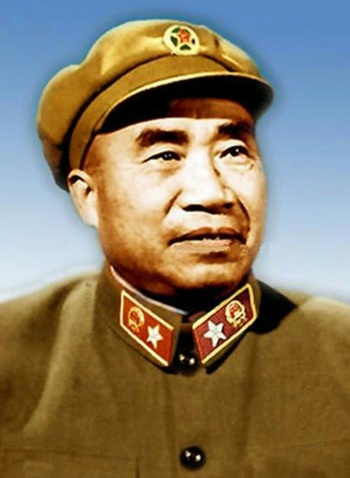 【詩人簡介】朱德(1886年12月1日—1976年7月6日),原名朱代珍,曾用名建德,字玉阶,四川仪陇人,中国共产党和中华人民共和国政治人物,原正国级领导人,为中国人民解放军和中华人民共和国的主要缔造者和创始人。朱德是中国近代史上重要的革命家和军事家,亦为中华人民共和国十大元帅之首。 【詩人簡介】朱德(1886年12月1日—1976年7月6日),原名朱代珍,曾用名建德,字玉阶,四川仪陇人,中国共产党和中华人民共和国政治人物,原正国级领导人,为中国人民解放军和中华人民共和国的主要缔造者和创始人。朱德是中国近代史上重要的革命家和军事家,亦为中华人民共和国十大元帅之首。
朱德早年毕业于云南陆军讲武堂,参加辛亥革命、护国战争、护法战争,官至云南省警察厅长。北洋政府时期,朱德曾获授勋三等文虎勋章、陆军中将军衔。抗日战争期间获国民政府授予国民革命军上将军衔,战后获抗战胜利勋章。
1922年,他赴德国留学期间加入中国共产党,其后到莫斯科中山大学学习。1927年8月1日,他参加南昌起义,此后率部到井冈山与毛泽东会师,先后担任红四军军长、红一军团总指挥、红一方面军总司令、中国工农红军总司令、中革军委主席,参加长征。抗日战争期间,担任中央军委副主席、第十八集团军总司令兼第二战区副司令长官。解放战争期间,任中国人民解放军总司令,同毛泽东指挥中共军队。
中华人民共和国成立后,于1955年获授予中华人民共和国元帅军衔并获一级八一勋章、一级独立自由勋章、一级解放勋章。朱德先后担任中央人民政府副主席、中共中央纪律检查委员会书记、中华人民共和国副主席、中共中央副主席等职务。1959年,当选全国人大常委会委员长。文化大革命期间,朱德受到冲击。1976年7月6日,朱德在北京逝世。
Note 1: Zhu Heping, in Everlasting Memories: Love Amidst the Flames of War, recalls this poem: In 1939, on the occasion of his grandfather’s fifty-third birthday, which he spent on the Taihang Front, the soldiers and villagers of Wangjiayu Village in Wuxiang County, Shanxi Province—where the Eighth Route Army Headquarters was located—came together to offer their congratulations. The writer Yang Shuo composed a poem in high praise of Zhu De. As a gesture of gratitude, Zhu De responded with this poem written in the same rhyme scheme as Yang Shuo’s. Yang Shuo’s original poem as follows:
In Celebration of General Zhu De:
“Mounted on the Taihang, banners blaze red,
Snow clouds sweep vast, fierce winds fill the sky.
The general’s arms are forged of iron,
Turning back raging tides, a hero for all ages.”
Note 2: "The Song of the Great Wind" (Da Feng Ge) was composed by Liu Bang, founding emperor of the Han dynasty, in 195 BCE. After pacifying the rebellion led by Ying Bu, Liu returned to his hometown of Pei County. At a celebratory banquet with fellow villagers, stirred by wine and emotion, he struck up a zhu (a plucked string instrument) and sang. Thus the "Song of the Great Wind" came into being. Named after its opening words, the poem is bold and majestic, and has been passed down for millennia. Its lyrics read:
“A great wind rises, clouds soar aloft,
My might dominates the land, yet I return to my homeland.
Oh, if only I could find heroes strong,
To guard the four quarters of my realm!”
Note 3: Background of the poem "Leaving the Taihang Mountains":
This Journey Can Console Our Comrads
—【Memoir Excerpt】Remembering Commander-in-Chief Zhu Leaving Taihang Mountains
By Mu Yuxuan
In the spring of 1940, the tendency toward surrender within the Kuomintang (KMT) was growing increasingly severe. The Party Central Committee, doing everything possible to persuade Chiang Kai-shek’s faction to continue resisting Japan, decided that Commander-in-Chief Zhu [Zhu De] would personally travel to Luoyang to negotiate with Wei Lihuang, the commander of the KMT’s First War Zone, on halting the conflicts between the CCP and KMT and uniting to resist Japan. Zhu’s personal journey to Luoyang was to further implement our Party’s policy of the Anti-Japanese National United Front—striving to win over those in the KMT army still willing to resist Japan, or at least not bent on anti-Communist friction.
However, Luoyang was filled with KMT secret agents. veteran anti-Communist Hu Zongnan was stationed there, and Zhu Huaibing, commander of the KMT’s 97th Army and notorious “friction expert,” was recuperating there. Everyone worried about Zhu’s safety. But Zhu said to his comrades:
“As long as the Kuomintang does not openly surrender to Japan, we must continue implementing the policy of the Anti-Japanese National United Front. The nation is in peril; survival of the people is at stake. We must give priority to the united front and the salvation of the country. My personal safety is of no importance.”
Before departure, central leaders repeatedly stressed that under no circumstances—whether breaking through Japanese blockades or traveling through KMT-controlled areas—could Zhu’s safety be compromised. Escorting Zhu out of the Taihang Mountains was the Red Third Company of the 769th Regiment under Zuo Quan’s command, led by company commander Li Changlin. All the Communist Party members swore that even if they fought to the last man, they would never allow harm to come to Commander Zhu.
On the morning of April 20, when the Third Company arrived at Zhu’s residence in Wuxiang, he was already prepared. Smiling, he greeted them: “Good, you’re here. Let’s set out.”
Accompanied by Kang Keqing, director of the Political Department of Headquarters’ guard unit, and Wang Baozhen, a KMT Central Executive Committee member and senior staff officer, as well as Xu Xiaobing and Wu Benli of the Yan’an Film Team, Zhu led a group of more than 400 people from Wangjiayu Headquarters. A guard company of 150 veterans marched in front; behind came Deputy Minister Zhou Wenlong of the Eighth Route Army’s Forward Headquarters Supply Department, with his staff and two transport companies, plus ten sturdy mules.
Zhu wore a new gray khaki uniform, with a wide leather belt engraved “Ruijin Memorial.” Mounted on a tall horse, he radiated vigor, embodying the authority of the Eighth Route Army’s Commander-in-Chief.
On April 23, the group reached Pingshun; on the 24th, the 129th Division arranged for the New 1st Brigade to send a company of infantry and a platoon of cavalry to Longzhen to greet Zhu. Brigade commander Wei Jie, commissar Tang Tianji, chief of staff Feng Jinhua, and political department director He Zhucheng went ahead to meet him. When Wei saw Zhu still strong and full of energy, he was overwhelmed with joy and rushed to welcome him. Zhu recognized Wei instantly, dismounted from afar, called out his name warmly, and shook hands with all who had come. Together, they proceeded to the brigade’s station at Guojiatuo village, Huguan County.
The brigade comrades wanted to prepare special food for Zhu. Yet because the base area was frequently harassed by Japanese troops, resources were scarce. After some effort, they only managed to buy a few pounds of chives and some eggs, making vegetarian dumplings. The logistics comrades felt it insufficient, but Zhu ate with a smile, saying:
“These dumplings are excellent. Next time, don’t even bother making dumplings—just eat together with everyone.”
That very night, despite travel fatigue, Zhu met with brigade leaders, listened to reports, and gave many important instructions. He analyzed the national war situation, stressing the need to prepare for protracted resistance:
-
Mobilize the masses deeply.
-
Build consolidated anti-Japanese base areas.
-
Expand armed forces.
-
Overcome difficulties through self-reliance.
At the time, nearby KMT troops were not only failing to resist Japan but also provoking friction with the Eighth Route Army. Zhu instructed:
-
Widely publicize the Party’s united front policy: unity, joint resistance, and shared contribution (“money from those with money, labor from those with strength, grain from those with grain”).
-
Struggle should be “justified, advantageous, and measured.”
-
Follow the principle: “If others do not offend me, I will not offend them; if they offend me, I must retaliate.”
-
Focus strikes on diehard factions.
His sincerity in seeking unity for the sake of resisting Japan moved even patriotic KMT officers. Wang Baozhen, witnessing Zhu’s genuine commitment, became deeply convinced and later contributed much to the cause of resistance and national liberation.
Shortly before Zhu’s arrival, Japanese troops and collaborators had raided nearby villages. The KMT’s 27th Army, terrified, fled without firing a shot. The New 1st Brigade, however, ambushed the raiders, killing over ten Japanese soldiers and capturing three horses, swords, coats, blankets, and canned goods. Wei Jie reported this victory to Zhu, offering the captured horses and sword. Zhu, delighted, said:
“Well fought! Now the KMT doesn’t fight the Japanese, yet claims we don’t fight them. I will show them these trophies—let them see who actually resists Japan! We will use facts to expose their lies and deal blows to the diehards.”
When Wei added that, after the Japanese retreated, the 27th Army rushed in to seize territory, Zhu slapped the table angrily:
“If they grab territory, we strike back. The united front must be conducted with reason, advantage, and restraint. If we struggle for unity, unity survives; if we yield for unity, unity perishes.”
His words armed the brigade leadership with sharper clarity, broadened their vision, and bolstered their confidence in victory.
On April 25, the brigade and villagers of Guojiatuo held a rally in the temple courtyard. Zhu spoke about the situation since the Xi’an Incident, the tasks ahead, and Party policies. He concluded:
“Although the KMT army still clashes with us, we must consider the larger picture. Through consultation and negotiation, we should resolve differences, maintain cooperation, unite friendly forces, and resist Japan together. This is the policy of our Party and army, and also the wish of progressive people nationwide.”
He then glanced at Wang Baozhen and added:
“Mr. Wang and I have agreed to set the Dajing area as a boundary: our troops north, theirs south, no troops stationed in between, and no crossing the line. This eliminates friction and ensures joint resistance.”
Wang nodded in agreement, and Zhu’s speech was met with prolonged applause.
On April 26, Zhu set out early with Wang and others, stopping on a hill near Dajing. He told Wang:
“Cooperation between the CCP and KMT is good, but you often create friction. This greatly harms the resistance. Now that we’ve set boundaries, the key is that both sides must honor the promise and abide by it conscientiously.”
This agreement became historically known as the “Dajing Demarcation.” It exposed the diehards, strengthened unity, and laid the groundwork for Zhu’s second trip to Luoyang, where he later reached an accord with Wei Lihuang, resulting in the historic “Southern Taihang Withdrawal” of the Eighth Route Army. This withdrawal united friendly forces, struck the enemy, and consolidated cooperation—writing a shining page in the history of the united front.
In April, the Taihang Mountains were warm, wheat sprouted in the fields, and breezes carried fresh fragrance. Zhu, riding southward, often turned to wave goodbye to the New 1st Brigade comrades. From Huguan, he continued toward Lingchuan and Jincheng.
One dawn in early May, Zhu reached Wangwu Mountain in Jiyuan, Henan. Looking over the surging Yellow River, hearing the rumble of Japanese artillery, and gazing at the ravaged land, he was stirred with emotion. Seizing his pen, he wrote his famous poem “Out of the Taihang”:
“At the head of Taihang, peaks tower steep;
The mighty Yellow River falls within sight.
Red flames of war blaze along both sides of the waters,
This journey consoles our comrades and friends.”
Introdction to the poet:
Zhu De (December 1, 1886 – July 6, 1976), originally named Zhu Daizhen, also known by the courtesy name Yujie and at one time by the name Jiande, was a native of Yilong, Sichuan. He was a prominent political figure of the Chinese Communist Party (CCP) and the People’s Republic of China (PRC), a former national-level leader, and one of the principal founders of both the People’s Liberation Army (PLA) and the PRC. Zhu De is recognized in modern Chinese history as an important revolutionary and military leader, and was ranked first among the ten Marshals of the PRC.
Zhu De graduated in his early years from the Yunnan Military Academy. He took part in the Xinhai Revolution (1911), the National Protection War (1915–16), and the Constitutional Protection Movement (1917–18), eventually rising to the post of Director of the Yunnan Provincial Police Department. During the Beiyang Government period, he was awarded the Order of the Golden Grain (Third Class) and held the rank of Lieutenant General in the Army. During the War of Resistance Against Japan (1937–45), he was conferred the rank of General in the National Revolutionary Army by the Nationalist Government, and after the war was awarded the Victory Medal of the War of Resistance Against Japan.
In 1922, while studying in Germany, Zhu De joined the Chinese Communist Party; afterwards he studied at Sun Yat-sen University in Moscow. On August 1, 1927, he participated in the Nanchang Uprising, and subsequently led his troops to the Jinggang Mountains, where he joined forces with Mao Zedong. He successively served as Commander of the Fourth Red Army, Chief Commander of the First Red Army Corps, Commander-in-Chief of the First Red Army Front, Commander-in-Chief of the Chinese Workers’ and Peasants’ Red Army, and Chairman of the Chinese Soviet Military Commission, also taking part in the Long March. During the War of Resistance Against Japan, he served as Vice Chairman of the Central Military Commission, Commander of the Eighteenth Group Army, and Deputy Commander of the Second War Zone. In the Chinese Civil War, he was Commander-in-Chief of the People’s Liberation Army, jointly directing the Communist forces with Mao Zedong.
After the founding of the PRC in 1949, Zhu De was awarded the rank of Marshal of the PRC in 1955 and received the First Class August 1 Medal, the First Class Medal of Independence and Freedom, and the First Class Liberation Medal. He later held a number of leading positions, including Vice Chairman of the Central People’s Government, Secretary of the Central Commission for Discipline Inspection, Vice President of the PRC, and Vice Chairman of the CCP Central Committee. In 1959, he was elected Chairman of the Standing Committee of the National People’s Congress.During the Cultural Revolution, Zhu De was subjected to political attacks. He passed away in Beijing on July 6, 1976.

|




.jpg)
