

|
|
|
|---|
 |
 |
 |
 |
 |
|
 |
|---|
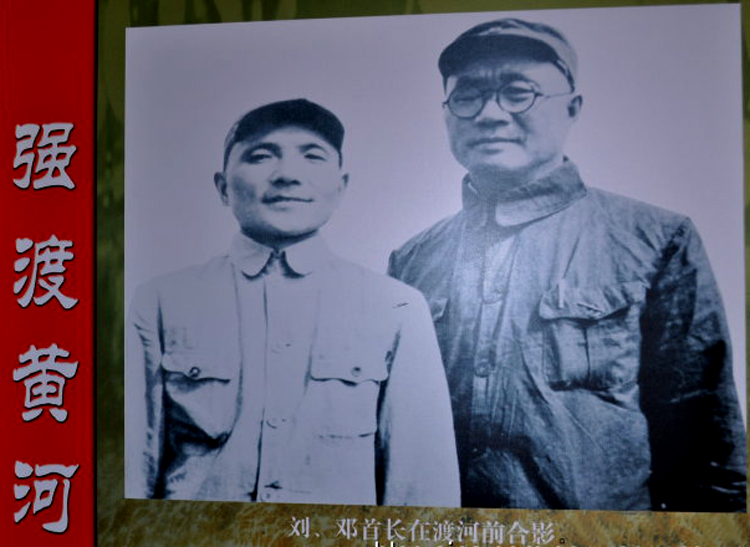
【註】1947年6月30日中共晋冀鲁豫解放军主力,在刘伯承、邓小平的指挥下,强渡黄河千里跃进大别山,实现毛澤東为解放战争全面胜利的重要布局。
【詩人简介】钱来苏(1884-1968),原名钱启隆,字叔常,后改名为钱拯,字来苏,太微,出生于奉天昌图府奉化县(今吉林省梨树县 )。少年时代家境优越,8岁时就报捐取得监生资格,14岁时又捐得县丞。19岁考入位于保定的北洋高等学校,后自费赴日本早稻田大学留学,因日俄战事紧张、国家面临内侮外患而弃学回国,重新考入保定优级师范。 1906年冬,父亲钱宗昌奉吉林将军达桂奏调,赴吉林办理新政,钱来苏随同来到吉林,帮助父亲创办法政学堂,遍结革命党人。他谢绝了巡抚衙门和提学司的职务,到吉林师范学堂当了一名国文教员。 1907年,吉林有史以来最早的两份报纸《吉林白话报》和《吉林宣报》相继创刊,古老的省城开始弥漫出渐渐浓郁的新闻气息。时隔不久,又有一份新的报纸--《吉林日报》出现在吉林城的大街小巷,这是由时任吉林高等审判厅厅丞的他父親钱宗昌出资创办的一份民办报纸,目的是“启发民智,宣传革命思想”,钱来苏与吉林候选县丞刘德均担任该报的编辑。 这是吉林第一份民办报纸,虽然创刊不到一年就因为资金匮乏而停刊,但它却在吉林新闻史上留下了重要一笔。 钱来苏在吉林生活期间,在任教和从事革命活动之余,还留下诸多诗作。 钱来苏在延安时期是怀安诗社的重要成员,与朱德、董必武、徐特立、林伯渠、谢觉哉、李木庵等并称“延安十老”。他一生中创作了两千余首诗,著有《孤愤草》《初喜集》《钱来苏诗选》等,诗作被收入《十老诗选》。中华人民共和国成立后,钱来苏任中央文史馆馆员。 Note: June 30, 1947, under the command of Liu Bocheng and Deng Xiaoping, the main forces of the People’s Liberation Army of the Shanxi–Hebe i–Shandong–Henan Field Army crossed the Yellow River in a daring operation, advanced a thousand li into the Dabie Mountains, and carried out Mao Zedong’s strategic plan for securing overall victory in the War of Liberation. Intruduction to the Poet: Qian Laisu (1884–1968), originally named Qian Qilong, courtesy name Shuchang, later renamed Qian Zheng, courtesy name Laisu, also styled Taiwei, was born in Fenghua County, Changtu Prefecture, Fengtian (today’s Lishu County, Jilin Province). Born into a prosperous family, he obtained the qualification of jiansheng (a degree-holder in the Qing dynasty) through purchase at the age of eight, and at fourteen similarly purchased the title of xiancheng (county assistant magistrate). At nineteen he entered the Beiyang Higher School in Baoding, and later went to study at Waseda University in Japan at his own expense. With the Russo-Japanese War escalating and the nation facing internal and external crises, he abandoned his studies abroad and returned home, enrolling instead at Baoding Superior Normal School. In the winter of 1906, when his father Qian Zongchang was transferred to Jilin by the provincial governor-general Da Gui to implement new reforms, Qian Laisu accompanied him there and helped establish the Jilin Law and Politics School, forming close ties with revolutionary activists. Declining official posts offered by the provincial government, he became a teacher of Chinese literature at the Jilin Normal School. In 1907, Jilin saw the launch of its first newspapers, Jilin Vernacular News and Jilin Gazette. Soon afterward another paper, the Jilin Daily, began circulating in the streets of the provincial capital. It was a privately funded newspaper established by his father Qian Zongchang, then deputy head of the Jilin High Court, with the aim of “enlightening the people and spreading revolutionary ideas.” Qian Laisu and Liu Dejun, then a candidate county magistrate, served as editors. Though the paper ceased publication within a year due to lack of funds, it left a lasting mark on the history of journalism in Jilin. During his years in Jilin, besides teaching and engaging in revolutionary activity, Qian also wrote many poems. In the Yan’an period, he was an important member of the Huai’an Poetry Society, and together with Zhu De, Dong Biwu, Xu Teli, Lin Boqu, Xie Juezai, and Li Mu'an was known as one of the “Ten Elders of Yan’an.” Over his lifetime he composed more than 2,000 poems and published works such as 《Gu Fen Cao》 (“Grass of Lonely Indignation”), 《Chu Xi Ji》 (“Collection of First Joy”), and 《Selected Poems of Qian Laisu》. His poems were also included in 《Selected Poems of the Ten Elders》. After the founding of the People’s Republic of China, Qian Laisu served as a member of the Central Research Institute of Culture and History.
|
|
|---|
| Contact 联系 | Last Revised
10/24/2025
| |


.jpg)
