神龟虽寿
--《步出夏門行》 组诗之一【註】
曹操
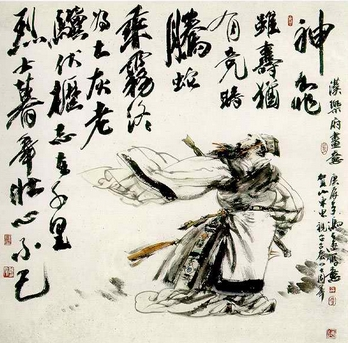
神龟虽寿,犹有竟时。
腾蛇乘雾,终为土灰。
老骥伏枥,志在千里;
烈士暮年,壮心不已。
盈缩之期,不但在天;
养怡之福,可得永年。
幸甚至哉,歌以咏志。
Though Tortoise Lives Long
- One of the poems in the "Walking Out through the Summer Gate"
by Cao Cao
The divine tortoise may live long,
Yet still must it meet its end.
The soaring serpent rides the mist,
But at last becomes ash and dust.
An old steed tethered in the stable,
Yet holds the will to run a thousand miles.
A hero, though in the twilight of years,
Still keeps a heart fierce and unyielding.
Life’s span is not wholly ruled by Heaven;
By cultivating joy and nurture,
One may attain enduring years.
How fortunate, how joyous!
I chant to express my will.
【註】《龟虽寿》为东汉文学家、政治家曹操创作的四言乐府诗之一,曹操当时击败袁绍父子,平定北方乌桓,踌躇满志,乐观自信,便写下这一组诗,抒写胸怀建功立业的豪情壮志。此时曹操已经五十三岁了。此诗是组诗《步出夏门行》的第四篇,其餘三篇分别是《观沧海》、《冬十月》、《河朔寒》。作者自比一匹上了年纪的千里马,虽然形老体衰,屈居枥下,但胸中仍然激荡着 治國平天下的雄心大志。
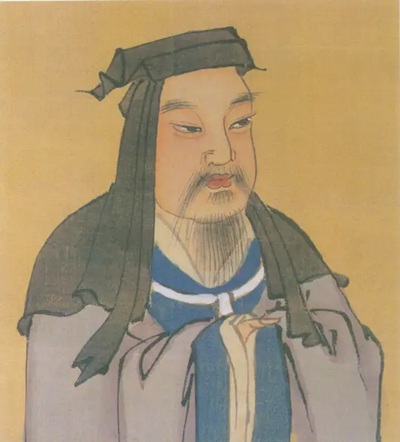 【詩人簡介】曹操(155年—220年3月15日),字孟德,一名吉利。 沛国谯县(今安徽亳州)人,东汉末年丞相、权臣、政治家、军事家、文学家、诗人、书法家, 魏王,曹魏政权奠基者。
曹操是太尉曹嵩之子。 曹操少年间任侠放荡,到二十岁时举孝廉为郎,授洛阳北部尉。后任骑都尉,参与镇压黄巾军,调济南相。董卓擅政时,散尽家财,起兵讨董卓。初平三年(192年),据兖州,分化诱降黄巾军三十余万,选取其中精锐组建青州军。 【詩人簡介】曹操(155年—220年3月15日),字孟德,一名吉利。 沛国谯县(今安徽亳州)人,东汉末年丞相、权臣、政治家、军事家、文学家、诗人、书法家, 魏王,曹魏政权奠基者。
曹操是太尉曹嵩之子。 曹操少年间任侠放荡,到二十岁时举孝廉为郎,授洛阳北部尉。后任骑都尉,参与镇压黄巾军,调济南相。董卓擅政时,散尽家财,起兵讨董卓。初平三年(192年),据兖州,分化诱降黄巾军三十余万,选取其中精锐组建青州军。
建安元年(196年),迎汉献帝至许县,从此用献帝名义发号施令,总揽朝政。在此前后相继击败袁术、陶谦、吕布等势力。建安五年(200年),在官渡之战中大败割据河北的袁绍,随后削平袁尚、袁谭,北击乌桓,统一北方。建安十三年(208年)进位丞相。同年率军南征,收服荆州,但在赤壁之战中败于孙刘联军。建安二十年(215年),取汉中,次年(216年)自魏公进爵魏王。建安二十五年(220年),曹操病死于洛阳,享年六十六岁。 曹魏建立后,被追尊为太祖,谥号武皇帝, 葬于高陵。
曹操用人唯才,抑制豪强,加强集权;在北方屯田,兴修水利。他的诸种举措使统治地区的社会经济得到一定的恢复和发展。对于曹操的功业及其为人,后世评论之多,分歧之大,可谓世所罕见。 此外,他知兵法,工书法,擅诗歌。其诗多抒发政治抱负,反映汉末人民的苦难生活,气魄雄伟,慷慨悲凉,开建安文学之风。著有《魏武帝集》,已佚失。今人辑有《曹操集》。
 Note: Note:
"Though the Tortoise Lives Long” is one of the four-character yuefu poems composed by Cao Cao, the Eastern Han writer and statesman. At the time, having defeated Yuan Shao and his sons and pacified the Wuhuan tribes in the north, he was brimming with confidence and optimism. It was then that he wrote this group of poems to express his lofty ambitions to establish great achievements. Cao Cao was already fifty-three years old.
This poem is the fourth piece in the cycle “Walking Out of the Summer Gate”; the other three are “Viewing the Sea”, “The Tenth Month of Winter”, and “Cold on the North of the Yellow River”. In the poem, the author likens himself to a thousand-li horse grown old: though aged and stabled, its body worn and weary, within it still surges the heroic aspiration to govern the realm and bring peace to all under Heaven.
Introduction to the poet:
Cao Cao (155 – March 15, 220), courtesy name Mengde, also called Jili, was a native of Qiao County, Peiguo (present-day Bozhou, Anhui). He was Chancellor of the Eastern Han in its final years, a powerful court minister, statesman, military strategist, writer, poet, and calligrapher. Later titled King of Wei, he was the founding figure of the Cao Wei regime. Cao Cao was the son of Grand Commandant Cao Song.
In his youth, Cao Cao was known for his daring and unrestrained ways. At the age of twenty, he was recommended as "Xiaolian" (filial and incorrupt candidate) and appointed Gentleman-in-Attendance, then served as Commandant of the North District of Luoyang. Later he was made Colonel of Cavalry, taking part in the suppression of the Yellow Turban rebels, and was appointed Chancellor of Jinan. When Dong Zhuo seized power, Cao Cao sold off all his family wealth to raise troops against him. In 192 (the third year of the Chuping era), he seized Yanzhou, persuaded and absorbed over 300,000 Yellow Turban rebels, and from their elite formed the Qingzhou Army.
In 196 (the first year of the Jian’an era), he welcomed Emperor Xian to Xuchang, from then on issuing orders in the emperor’s name and taking charge of state affairs. Around this time, he successively defeated Yuan Shu, Tao Qian, Lü Bu, and others. In 200, at the Battle of Guandu, he inflicted a crushing defeat on Yuan Shao, the warlord controlling Hebei, and soon after destroyed Yuan Shang and Yuan Tan, then marched north against the Wuhuan tribes, thereby unifying northern China. In 208 (the thirteenth year of Jian’an), he was elevated to Chancellor. That same year he led a southern campaign, seizing Jingzhou, but was defeated by the allied forces of Sun Quan and Liu Bei at the Battle of Red Cliffs. In 215, he captured Hanzhong, and the following year (216) he advanced from Duke of Wei to King of Wei. In 220 (the twenty-fifth year of Jian’an), Cao Cao died in Luoyang at the age of sixty-six. After the establishment of Cao Wei, he was posthumously honored as Emperor Taizu, with the temple name Wu Huangdi (“Martial Emperor”), and was buried at Gaoling.
Cao Cao valued talent above all else in selecting men, curbed the power of great families, and strengthened central authority. In the north, he promoted the tuntian (state-farm) system and developed water conservancy works. These measures brought a measure of recovery and development to the economy of the territories under his rule.
On his achievements and his character, later generations produced an extraordinary abundance of commentary, with strikingly divergent judgments. In addition, Cao Cao was deeply versed in military strategy, skilled in calligraphy, and accomplished in poetry. His poems often expressed his political ambitions and reflected the hardships of the common people at the end of the Han dynasty. Bold, vigorous, and imbued with both grandeur and melancholy, they opened the way for the literary style of the Jian’an era. His collected works, the 《Anthology of Emperor Wu of Wei》, has since been lost, though modern scholars have compiled extant pieces into the 《Collected Works of Cao Cao》. |










.jpg)
