|
逢入京使
岑参
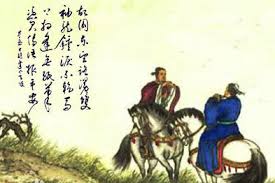
故园东望路漫漫,双袖龙钟泪不干。
马上相逢无纸笔,凭君传语报平安。
Encounter Courier for the Capital
by Cen Shen
Looking east toward my homeland the road stretches endlessly,
My sleeves are soaked and heavy with tears that will not dry.
Meeting you on horsebacks without paper or brush,
I rely on you, my friend, to carry words of me safe and sound back home.
【詩人簡介】岑參(約715-770),字幼文,祖籍南陽棘陽(今河南省新野縣),出身於世代官宦之家,自幼勤學,才華早露。天寶三載(744年)進士及第,後曾任嘉州刺史幕僚,多次隨軍出征西域,在安西、北庭等地任職,親身體驗邊塞生活,對其詩歌創作影響深遠。岑參與高適並稱“高岑”,同為盛唐著名邊塞詩人,其作品題材多描寫西北邊疆的風光、軍旅生活與戰爭場景,風格雄渾豪邁,氣象宏大,善於誇張鋪陳,營造蒼涼壯麗的意境,常以大漠、孤城、寒風、鐵衣、胡笳、黃沙等意象,展現將士的豪情與邊地的奇偉景色。代表作品有《走馬川行奉送出師西征》《白雪歌送武判官歸京》《輪臺歌奉送封大夫出師西征》,在唐代詩壇上具有重要地位,其壯闊的邊塞詩境界對後世影響深遠。
Introduction to the poet:
Cen Shen (ca. 715–770), courtesy name Youwen, was a native of Jiyang in Nanyang (present-day Xinye County, Henan Province). Born into a long-established family of officials, he was diligent in study from an early age and displayed remarkable talent. In 744 (the third year of the Tianbao reign), he passed the imperial examinations and later served as an aide to the governor of Jiazhou. He accompanied military expeditions to the Western Regions several times and held posts in Anxi and Beiting, where his firsthand experience of frontier life profoundly shaped his poetry.
Together with Gao Shi, he was celebrated as one of the great frontier poets of the High Tang, often referred to collectively as “Gao and Cen.” His works largely depict the scenery of the northwestern borderlands, military life, and scenes of warfare. Majestic in style and vast in scope, his poetry is known for its use of exaggeration and grand imagery, creating a desolate yet magnificent atmosphere. With recurrent images such as deserts, lonely fortresses, bitter winds, iron armor, Hu flutes, and drifting yellow sands, his verse conveys both the heroic spirit of soldiers and the grandeur of the frontier landscape.
Among his representative works are “Song of Galloping to the River in Farewell to a General Setting Out West,” “Song of White Snow in Farewell to Military Commissioner Wu Returning to the Capital,” and “Song of Luntai in Farewell to General Feng Setting Out West.” He held an important place in the poetry of the Tang dynasty, and the vast, heroic vision of his frontier verse exerted a lasting influence on later generations. |










.jpg)
