鄙谚曰:“前事之不忘,后事之师也。”是以君子为国,观之上古,验之当世,参之人事,察盛衰之理,审权势之宜,去就有序,变化因时,故旷日长久而社稷安矣。
-- 贾谊:《西汉书-过秦论(下)》【註】
A common saying goes: “Lessons of the past serve as teachers for the future.” Therefore, when a man of noble character governs a state he looks back to antiquity, tests it against the present age, compares it with policy of current human affairs, observes the principles of rise and decline, and examines the proper use of power and influence. His advances and withdrawals follow due order, and his changes accord with the times. Thus, through the passing of days and years, the realm and its altars of state may remain secure.
— Jia Yi: 《Book of Western Han》-“On the Faults of Qin” (Part III)
自古自今,与民为仇者,有迟有速,民必胜之。 -- 贾谊
From ancient times to the present, those who make themselves enemies of the people may meet their downfall sooner or later — but the people will always prevail in the end. -- Jia YI
民者,万世之本也。——贾谊
The people are the foundation of the state for all ages. -- Jia Yi
祸兮福所依,福兮祸所伏;忧喜聚门兮,吉凶同域。—贾谊
Misfortune is what fortune depends upon, and fortune is what misfortune hides within; sorrow and joy gather at the same gate, and good and ill fortune dwell in the same domain. -- Jia Yi
习与正人居之,不能无正也;犹生长于齐,不能不齐语也。——贾谊
If one lives among upright people, one cannot help but become upright; just as one raised in the State of Qi cannot help but speak its dialect. -- Jia Yi
小智自私兮,贱彼贵我;达人大观兮,物无不可。——贾谊
The petty-minded act for themselves, despising others while exalting themselves; but the wise and broad-minded see all things in their proper place and hold nothing in contempt. -- Jia Yi
【註】《西漢書》即指《漢書》主要部分西漢歷史。《漢書》為中國的第一部紀傳體斷代史,《漢書》的記載,上起劉邦被封為漢王元年(西元前206年),下終王莽地皇四年(西元23年),以西漢一朝為主,同時亦囊括了四年楚漢之爭,十五年王莽改制,共二百三十年的史事。全書包括十二「紀」、八「表」、十「志」、七十「列傳」,凡一百篇,共八十餘萬言。至唐代顏師古以《漢書》卷帙繁重,便將篇幅較長者分為上、下卷或上、中、下卷,成為現行本《漢書》一百二十卷。《漢書》中所載漢武帝以前之紀、傳,多用《史記》舊文,武帝以後之史事,則為新撰。漢書雖沿用史記舊文,卻補充了大量新的資料,並非完全抄襲。如紀,大量增補了當時的詔令等文獻,因此比史記更顯得有史料價值。
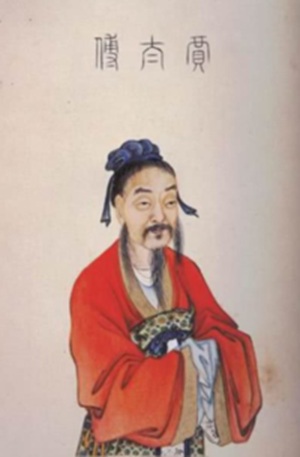 【作者簡介】賈誼(前200年—前168年),西漢時期雒陽(今河南省洛陽市東)人。由於是知名的學者,人稱賈生、當過長沙王太傅,故世稱賈太傅、賈長沙。漢朝著名的政論家、思想家、文學家。其政論文《過秦論》、《論積貯疏》、《治安策》等,在歷史上有很高的地位。 【作者簡介】賈誼(前200年—前168年),西漢時期雒陽(今河南省洛陽市東)人。由於是知名的學者,人稱賈生、當過長沙王太傅,故世稱賈太傅、賈長沙。漢朝著名的政論家、思想家、文學家。其政論文《過秦論》、《論積貯疏》、《治安策》等,在歷史上有很高的地位。
賈誼於漢高帝七年出生於雒陽(河南郡郡治所在),從小研究討論詩經、書經道理,才學過人,文筆漂亮。十八歲聞名於郡里,得到讚賞,被河南郡守吳公召致門下,成為郡守門客。
賈誼22歲時,漢文帝登基,擢升河南郡守吳公為廷尉,賈誼也因吳公推薦當上博士,是當時漢朝政府聘用的博士當中最年輕的一位。賈誼見解精闢,文帝很欣賞他,一年後被提升為太中大夫。
賈誼以儒學與五行學說設計一整套漢代禮儀制度,進一步代替秦制,主張「改正朔、易服色、制法度、興禮樂」,漢文帝並沒有採納。
前178年,漢文帝想任命賈誼擔任公卿,遭到官僚與宗室階層反對,丞相絳侯周勃、東陽侯張相如、馮敬等老臣上書表態反對,認為賈誼「雒陽之人年少初學,專欲擅權,紛亂諸事」。賈誼又時常在朝堂上,譏諷漢文帝寵臣鄧通。
文帝四年(西元前176年)賈誼被外放為長沙王太傅,輔佐長沙王吳著。至長沙赴任的途中,賈誼對貶謫不滿,又聽聞長沙氣候潮濕多雨,以為自己會早死。他心情悲觀失望,渡湘江時作了《弔屈原賦》,在長沙度過三年多左遷生活。任長沙王太傅三年時,有象徵不祥的鵩鳥飛入房屋,賈誼有感而作《鵩鳥賦》。《弔屈原賦》和《鵩鳥賦》是他的騷體賦代表作。
漢文帝七年(前173年)、漢文帝突然想起賈誼,召賈誼回長安,問以鬼神之事,夜半前席。既罷,曰:「吾久不見賈生,自以為過之,今不及也。」關於此事後世有爭論;李商隱頗為賈誼不平,有詩吟「可憐夜半虛前席,不問蒼生問鬼神」為賈生不得重用而嘆息。
不久,漢文帝拜賈誼為自己愛子梁王劉揖的太傅。賈誼除太傅責任以外,主要寫政論文來表達個人觀點,勸諫漢文帝,《治安策》、《論積貯疏》是他這時的代表作。其政論文既有戰國縱橫家古文的餘風,又有法家韓非子等人論證嚴謹風格的影響,洋洋灑灑,文采斐然。
賈誼的辭賦可謂上承屈原、宋玉,下開枚乘、司馬相如,是從楚辭發展到漢賦的重要橋梁。
漢文帝十一年(前169年),梁王墜馬而死,諡懷,史稱梁懷王。賈誼認為自己沒有做好輔導親王的職責,終日哭泣,於第二年憂鬱而終,得年33歲。
Note:
The 《Book of the Western Han》 refers to the main portion of the 《Book of Han (Hanshu)》, which records the history of the Western Han dynasty. The 《Hanshu》 is China’s first biographical-style dynastic history. Its narrative begins with the first year when Liu Bang was enfeoffed as King of Han (206 BCE) and ends in the fourth year of Wang Mang’s Dihuang era (23 CE). While centered on the Western Han, it also includes the four years of the Chu–Han Contention and the fifteen years of Wang Mang’s reforms, covering a total span of 230 years.
The work consists of 12 “Annals” (ji), 8 “Tables” (biao), 10 “Treatises” (zhi), and 70 “Biographies” (liezhuan), altogether 100 sections comprising more than 800,000 characters. During the Tang dynasty, Yan Shigu, finding the 《Hanshu》 too voluminous, divided the longer sections into two or three parts, resulting in the current edition of 120 scrolls.
For the annals and biographies concerning events before Emperor Wu, much of the text was borrowed from the earlier 《Records of the Grand Historian (Shiji)》. For events after Emperor Wu, however, new material was composed. Although the 《Hanshu》 incorporated many passages from the Shiji, it also added a great deal of new content and was by no means a simple copy. For example, in the annals it supplements the record with numerous imperial edicts and other documents of the time, giving it greater value as a historical source than the 《Shiji》.
Introduction to the author:
Jia Yi (200 BC – 168 BC) was a native of Luoyang in the Western Han dynasty (present-day east of Luoyang City, Henan Province). As a renowned scholar, he was known as “Jia Sheng.” Having once served as tutor to the King of Changsha, he was also respectfully referred to as “Grand Tutor Jia” or “Jia of Changsha.” He was a famous political essayist, thinker, and man of letters of the Han dynasty. His political writings, such as On the Faults of Qin (Guo Qin Lun), Memorial on the Accumulation of Wealth (Lun Ji Zhu Shu), and Plan for Securing Stability (Zhi An Ce), hold a high place in Chinese history.
Jia Yi was born in the 7th year of Emperor Gaozu of Han (200 BC) in Luoyang (seat of Henan Commandery). From a young age, he studied and discussed the principles of the 《Book of Songs》 and 《Book of Documents》, displaying extraordinary learning and elegant writing. At eighteen, he was already famous in his commandery and was praised by all. Wu Gong, the governor of Henan, summoned him as a retainer.
At age twenty-two, when Emperor Wen of Han ascended the throne, Wu Gong was promoted to Chief Justice (Tingwei), and upon his recommendation Jia Yi was appointed Erudite (Doctor) at court, the youngest among all scholars employed by the Han government at the time. With his incisive insights, Jia Yi won the emperor’s admiration and, a year later, was promoted to Grand Master of the Palace (Taizhong Dafu). He designed a complete system of Han ritual institutions based on Confucianism and the Five Phases theory, aiming to replace Qin institutions. He advocated “changing the calendar, altering official dress, establishing regulations, and promoting ritual and music,” but Emperor Wen did not adopt these proposals.
In 178 BC, Emperor Wen considered appointing Jia Yi as a high minister. The bureaucracy and royal clan, however, opposed him. Senior ministers such as Chancellor Zhou Bo (Marquis of Jiang), Zhang Xiangru (Marquis of Dongyang), and Feng Jing memorialized against the appointment, saying that Jia Yi “was a young man from Luoyang, newly learned, seeking only to monopolize power and causing confusion in affairs.” Moreover, Jia Yi often satirized the emperor’s favorite, Deng Tong, in court.
In the 4th year of Emperor Wen (176 BC), Jia Yi was reassigned as Grand Tutor to the King of Changsha, Liu Fa. On the journey to Changsha, dissatisfied with his demotion and fearing the damp, rainy climate would shorten his life, he grew despondent. While crossing the Xiang River, he composed the “Rhapsody in Lament for Qu Yuan (Diao Qu Yuan Fu)”. He spent more than three years in Changsha in this relegated post. During this period, an ominous owl flew into his residence, inspiring his “Rhapsody on the Owl (Fu Niao Fu)”. These two works are his representative sao-style fu (rhapsodies in the tradition of Qu Yuan).
In the 7th year of Emperor Wen (173 BC), the emperor suddenly thought of Jia Yi again, recalled him to Chang’an, and consulted him on matters of spirits and ghosts, even inviting him close to his seat at midnight. Afterward, the emperor said, “I have long not seen Jia Sheng. I once thought I had surpassed him, but now I find I cannot compare.” Later generations debated this episode. The Tang poet Li Shangyin sympathized with Jia Yi’s frustration, writing, “Pity that at midnight he was summoned to draw close, yet no questions of the people, only of spirits and ghosts”—lamenting that Jia was not entrusted with real responsibility.
Soon after, Emperor Wen appointed Jia Yi as Grand Tutor to his beloved son, Prince Liu Yi of Liang. Besides fulfilling his tutor duties, Jia Yi mainly wrote political essays to express his views and admonish the emperor. His “Plan for Securing Stability” and “Memorial on the Accumulation of Wealth” date from this period. These essays still retained the rhetorical flair of the Warring States persuaders while also reflecting the rigorous argumentative style of Legalist thinkers such as Han Feizi—grand in scope and brilliant in expression.
As for his rhapsodies, Jia Yi inherited the tradition of Qu Yuan and Song Yu, while opening the way for Mei Cheng and Sima Xiangru, thus forming an important bridge from the 《Chuci》 tradition to Han fu.
In the 11th year of Emperor Wen (169 BC), Prince Liu Yi of Liang fell from his horse and died, posthumously titled Huai, known to history as Prince Huai of Liang. Jia Yi blamed himself for failing in his duty to guide the prince and wept all day long. The following year, he died in grief at the age of thirty-three. |










.jpg)
