

|
|
|
|---|
 |
 |
 |
 |
 |
|
 |
|---|
|
人生箴言【註】
(作於 01/2011)
【譯者註】《海外南开人》電子期刊第43期的中译英“人生箴言”由该刊主编伍语生教授出题,让我来翻译。伍先生说,这几句话是他父亲从小就经常教导他的做人准则。共有十句,都是很重要的人生行为准则和格言。我想到是否可以用十四行诗的形式表达出来。就这样试译了,英譯根據原文的主題增加了四行。 該期出版後,應伍教授的邀請,在紐約南開校友集會上讀了一遍,很受大家的歡迎,尤其是受到兒童家長的喜愛,看来达到了预想效果。英國經典十四行诗有许多就是以道德说教为主题的,如莎士比亚的第116首十四行诗就完全是论述婚姻应该专一和对婚姻忠诚的誓言。我为本詩英譯"Virtues in Life"配以十四行詩的形式,目的是为了这几句非常重要而且很实用的警世箴言有一个順口而便于记忆的形式。 十四行诗起源于十四世纪意大利文艺复兴运动,在十六世纪初期英国诗人华埃特(Thomas Wyatt, 1503-1542)和亨利萨里伯爵(Henry Howard, Earlof Surrey, 1517-1547)将具有强烈人文主义色彩和反守旧思想的意大利十四行诗译介到英国。英国十四行诗体也称为莎士比亚十四行诗体,因为莎士比亚的十四行诗的成就和影响最大。一般是前十二行叙事描写或论述,最后两行是结论总结。十四行诗还有其它格律要求,如每行都是五音步十音节;全诗分为三个四行体(quatrains)和一个双行体(couplet),而形式上全诗仍是一个诗节,不分成四个诗节。这四部分的内容变化及相互关系与中国传统作诗法讲的"起承转合"四步法颇为相似,但十四行诗的"合"的部分只有两行。典型的英国十四行诗的韵式为abab cdcd efef gg.
伍語生,筆名 川遲。我的青少年时代是在重庆。日本飞机狂轰滥炸,中国一穷二白物价飞涨,社会风气糜烂,民不聊生。就在这样极其恶劣的环境下,我却是在父母兄长拟定的座右铭:“读书用功,作事有恒,运动以强身。言多必失败,要自拔流俗,为人以勤俭、谨慎。人贵自立,言出必行。不为富贵所瀛,不为威武所屈”的要求下渡过了我的童年时代,是在父母兄长严格的家庭教育环境中成长的。每天早起运动,背读唐诗,宋词,按时上学、放学回家。自幼就爱帮助弱小同学。当时的重庆社会风气糜烂,物价飞涨,兵痞横行,我自己就曾经两次被国民党兵毒打。日寇飞机狂轰滥炸,可是歌舞厅中照样是每天是“夜上海,夜上海,你是一个不夜城”的靡靡之音。 但是在学校中却是完全不同的天地。学生运动风起云涌,罢课,罢教;同学们义愤填膺,立志救中国,偷偷阅读《新民主主义》革命理论。1948年于重庆与同学同登歌乐山我写下了《西江月》 “举目云涛晓雾,冷看群山劲松。努力攀登须从容,目标不会是空。心欲共天随往,快意当攀顶峰。驻立喜看朝阳红,有志方能成功。” 歌乐山, 重庆市风景区,山高雄伟气势磅礴。盼中国革命胜利,幼年立志要把中国建设成为强大的国家。 1949年末重庆解放,1950年高中还未毕业我就激情满怀地参加了革命工作。1954年全国选拔优秀在职适龄青年投考大学,于二郎山脚下青衣江畔,野外工作队推荐我报名,我以报上公布的第一个名字考入了南开大学生物学系。在读期间南开十分重视学生德,智,体全面发展,全国学生实行劳动卫国制,我响应号召努力参加体育锻炼,通过了劳卫制二级(最高级别)。我先后任班干部和系学生会主席。1958年毕业分配至沈阳农业大学任教《动物生物化学》,任教期间被学生赞誉为年青的后起之秀。 文化大革命中,我因被大字报将我所作《王若飛同志在狱中》读后感一诗胡乱解释,在小东劳动两年。1980年家兄受国防部邀请回国讲学。接我来到美国,在纽约市立大学工作一年后作為研究人員转到哥伦比亚大学工作到退休。 退休后任纽约《旅美南开校友会》会长,纽约华人社团联席会共同主席,理事。参加华人社区活动。2000年创办《海外南开人》(NANKAI OVERSEAS)。后发展成了网上电子刊物,21年来在高东山学长和各位编委的共同努力下,《海外南开人》不间断地、成功地为海外南开学子所取得的優異學習工作成就留下了令人欣慰的足迹。 Translator's Note: In "Issue 43" of the 《Nankai Overseas》 e-journal, the poem “Virtues in life” in Chinese-to-English translation were proposed by the editor-in-chief, Professor Wu Yusheng, who invited me to translate it. Mr. Wu said that these sentences were the principles of conduct his father had often taught him since childhood. There are ten in total, each an important rule of life and a moral maxim. I thought of presenting them in the form of a sonnet. Thus I attempted a trial translation, and in line with the original themes, the English version adds four extra lines. After the issue was published, at Professor Wu’s invitation, I read it aloud once at a Nankai alumni gathering in New York. It was warmly received, especially by the parents of children, so it seems the intended effect was achieved. Many classic English sonnets are written with moral instruction as their theme, for instance, Shakespeare’s Sonnet 116 is entirely a declaration that marriage should be steadfast and faithful. I rendered Professor Wu's poem into English under the title "Virtues in Life", using the sonnet form, with the aim of giving these very important and practical admonitions a smooth and easily memorable expression. The sonnet originated in fourteenth-century Italy during the Renaissance. In the early sixteenth century, the English poets Thomas Wyatt (1503–1542) and Henry Howard, Earl of Surrey (1517–1547) introduced the Italian sonnet—rich in humanist spirit and opposition to conservatism—into England. The English sonnet form is also called the Shakespearean sonnet, since Shakespeare’s works in this form achieved the greatest influence. Typically, the first twelve lines narrate, describe, or argue, while the final two lines present a conclusion or summary. The sonnet also follows certain metrical rules: each line is in iambic pentameter, ten syllables long; the poem consists of three quatrains and a final couplet, yet is written as a single stanza rather than divided into four. The progression and interplay among these four parts closely resemble the traditional Chinese poetic structure of “introduction, continuation, transition, and conclusion,” except that the “conclusion” in the sonnet is compressed into just two lines. The typical rhyme scheme of the English sonnet is abab cdcd efef gg. The poet's self-introduction: Wu Yusheng, pen name Chuan Chi. My teenage years were spent in Chongqing. At that time, Japanese planes were conducting frenzied bombings. China was impoverished, prices skyrocketed, society was corrupt, and ordinary people could hardly survive. Yet, in the midst of such harsh conditions, I grew up under the guiding motto set by my parents and elder brothers: “Study diligently, work with perseverance, exercise to strengthen the body. It was within this strict family education that I spent my childhood—rising early each day to exercise, reciting Tang poems and Song lyrics, going to school on time, and returning home after class. From an early age I enjoyed helping weaker classmates. In those years, Chongqing was rife with corruption: inflation was rampant, soldiers ran amok. I myself was beaten twice by Kuomintang soldiers. Japanese bombers rained destruction overhead, while in the dance halls the decadent refrain of “Night Shanghai, Night Shanghai, you are a sleepless city” echoed every evening. But schools were a completely different world. Student movements surged—strikes, boycotts; classmates burned with indignation, determined to save China, secretly reading the revolutionary theories in the book 《On New Democracy》 by Mao. In 1948, on an outing to climb up Mount Gele with classmates, I wrote a poem "To the Tune of West River Moon": “Lifting my eyes, waves of cloud and morning mist, Geleshan, a majestic scenic mountain in Chongqing, inspired my youthful hope for China’s revolutionary victory and my early resolve to help build China into a strong nation. At the end of 1949, Chongqing was liberated. In 1950, even before graduating from high school, I threw myself with passion into revolutionary work. In 1954, during a nationwide selection of outstanding young workers for university, I was recommended by my fieldwork team by the Qingyi River at the foot of Erlang Mountain, Sichuan Province. My name was the first published on the list of admits, and I entered the Biology Department of Nankai University in Tianjin. During my studies, Nankai placed strong emphasis on well-rounded development in virtue, intellect, and physical fitness. Responding to the call of the national "Labor and Defense System in Physical Training", I exercised diligently in sports and achieved the second-level standard (the highest level). I served as both student leader of the class and chairman of the departmental student union. Upon graduation in 1958, I was assigned to Shenyang Agricultural University to teach Animal Biochemistry, where students praised me as a promising young teacher. During the Cultural Revolution, a poem I had written, "Reflections on Reading 《Comrade Wang Ruofei in Prison》", was distorted in a big-character poster, and I was sent for two years of labor in Xiaodong Farm, Liaoning Province. In 1980, my elder brother who wored in the US Army, was invited back to China by the Ministry of National Defense to give lectures. He brought me to the United States, where I first worked at the City University of New York, and later became a researcher at Columbia University, remaining there until retirement. After retiring, I served as president of the Nankai Alumni Association in America (New York Chapter), as co-chairman and board member of the Federation of Chinese Associations in New York, and took part in community activities. In 2000, I founded the magazine 《Nankai Overseas》, which later developed into an online electronic journal. Over the past 21 years, through the joint efforts of senior alumnus Gao Dongshan and all the editorial board members, 《Nankai Overseas》 has continuously and successfully recorded the inspiring and remarkable achievements of Nankai students who study and work in the United States and other countries as well. —Wu Yusheng
|
|
|---|
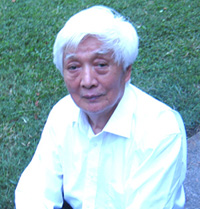 【詩人自我簡介】