|
善禁者
荀悦
善禁者,先禁其身而后人。不善禁者,先禁人而后身。善禁而至于不禁,令亦如之。若乃肆情于身,而绳欲于众。行诈于官,而矜实于民。求己之所有余,夺下之所不足。舍己之所易,责人之所难。怨之本也。
-- 《申鉴:政体第一》【註】
He Who Is Good at Banning
by Xun Yue
He who is good at banning complies with the interdicts himself first. He who is not good at banning requires others to observe the prohibitions first and himself second. The best banning is no law necessary to ban. Decrees are the same. If the Imperial Court indulges in sensuous pleasures, but depresses the desires of the common people; if the officials are cheating and deceiving while demanding the rank and file to be honest; if the rich accumulates more than they need while robbing the poor of the little to live with; if you fail to do what is easy, but coerce others to accomplish the impossible, all these will be the roots and causes of resentments and animosity.
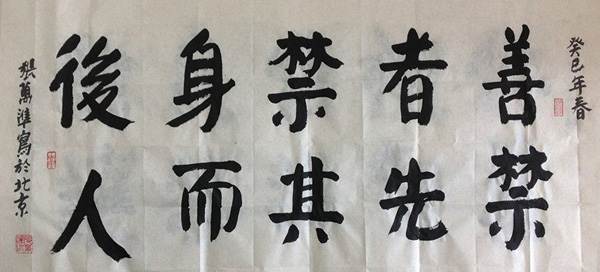 【註】《申鉴》中国东汉末思想家荀悦的政治、哲学论著。《后汉书》本传说,荀悦志在匡辅献帝,因曹操揽政,“谋无所用,乃作《申鉴》”。意为重申历史经验,供皇帝借鉴。全书5卷,包括《政体》、《时事》、《俗嫌》《杂言上》、《杂言下》 5篇。 【註】《申鉴》中国东汉末思想家荀悦的政治、哲学论著。《后汉书》本传说,荀悦志在匡辅献帝,因曹操揽政,“谋无所用,乃作《申鉴》”。意为重申历史经验,供皇帝借鉴。全书5卷,包括《政体》、《时事》、《俗嫌》《杂言上》、《杂言下》 5篇。
【作者简介】荀悦(148-209),字仲豫,河南许昌人。《后汉书》说他:「年十二,能说春秋」。汉灵帝时宦官当道,有志节的知识分子都隐居了,荀悦也隐居起来。汉献帝时,曹操当政,荀悦和他从弟苟或,还有孔融等「侍讲禁中,旦夕谈论」。虽想施展抱负,但谋无所用,乃做《申鉴》五篇。其思想主旨,一方面是反对迷信惑众,一方面是反对土地私有,他对刑罚的立论,是主张「统法」,提出「罚妄行,则恶不惩」说法,不失为一种进步的法律观念。
Note:
《Shenjian》 (Examination of Principles) is a political and philosophical treatise by Xun Yue, a thinker of the late Eastern Han dynasty. According to the 《Book of the Later Han》 (Hou Hanshu), Xun Yue aimed to assist Emperor Xian, but since Cao Cao monopolized state power, “his plans had no place to be put into effect, so he composed the 《Shenjian》.” The title means to “reaffirm historical lessons for the emperor’s reference.” The work consists of five juan (scrolls), containing the following chapters: Political Systems (政体), Current Affairs (时事), Common Prejudices (俗嫌), Miscellaneous Discourses, Part I (杂言上), and Miscellaneous Discourses, Part II (杂言下).
Introduction to the Author:
Xun Yue (148–209), courtesy name Zhongyu, was from Xuchang in Henan Province. The 《Book of the Later Han》 records that “by the age of twelve, he could expound on the 《Spring and Autumn Annals》.” During Emperor Ling’s reign, when eunuchs dominated the court, upright scholars withdrew into seclusion; Xun Yue likewise retired from public life. Under Emperor Xian, when Cao Cao controlled the government, Xun Yue, along with his cousin Gou Huo and figures such as Kong Rong, served as court lecturers, discussing matters daily within the palace. Although he wished to realize his aspirations, his plans could not be employed, and thus he composed the five chapters of the 《Shenjian》. The main thrust of his thought lay, on the one hand, in opposing superstition to mislead the people, and on the other, in criticizing private land ownership. On legal matters, he advocated a unified system of law (“统法”), and put forward the view that “if punishments are carried out recklessly, wrongdoing goes unpunished.” This represented a relatively progressive legal perspective for his time. |











.jpg)

