


|
|
|
|---|
 |
 |
 |
 |
 |
|
 |
|---|
唐才常(1867年-1900年)湖南瀏陽人。生於清同治六年,與譚嗣同同鄉,同师于欧阳中鹄,并称为“浏阳二杰”。早年就讀於長沙校經書院、岳麓書院及武昌兩湖書院。 光绪二十三年(1897年),与熊希龄、谭嗣同、蒋德钧、陈三立等创湖南时务学堂。二十四年(1898年)正月与谭嗣同等发起创立南学会,担任议事会友。八月应谭嗣同电召赴京,行至汉口,闻政变发生,嗣同等就义。遂南返,旋往上海,历游香港、新加坡、日本等地。光绪二十五年(1899年)二月回到上海,主编《亚东时报》。 光緒二十六年(1900年)義和團事起,唐在上海與沈藎、畢永年等组织“正气会”,對外託名“東文譯社”,后改名为“自立会”,自任总司令;七月一日,在上海張園邀集維新人物,召開“中國國會”,由葉浩吾主席,宣布:「不認通匪矯詔之偽政府」「保全中國自主」等事項;並由容閎以英文起草對外宣言,謂「決定不認滿洲政府有統治清國之權」。會中推舉容閎、嚴復為正副會長,才常任總幹事,參加者八十餘人,孫寶瑄、汪康年、章太炎、畢永年等與焉。會後決定自立軍分七路大舉,定七月十五日在汉口、汉阳、安徽、江西、湖南等地同时起事。因保皇會匯款不至,擬延於二十九日發難。自立军前军统领秦力山在安徽淮南大通,未得情报,仍按期起事,迅遭失败。 清政府闻风声,沿长江戒严。湖广总督張之洞對於唐才常的活動早有所聞。唐肄業於兩湖書院,算是他的門生。後有剃頭匠向都司告密,張之洞派兵搜索。七月二十七日晚,汉口总机关被破获,唐与林圭、傅慈祥、田邦璿等12人被捕。張之洞特派鄭孝胥去審問,才常說:「此才常所為,勤王事,酬死友,今請速殺!」並獄中題詩“賸好頭顱酬故友,無損面目見群魔”。於七月二十八日夜二更於武昌大朝街滋陽湖畔處死刑,臨刑前有詩“七尺微軀酬故友,一腔熱血濺荒丘。”同難者共十一人,懸才常首級於漢陽門。 遗稿《唐才常集》在他殉難幾年後出版。 Introduction to the poet: Tang Caichang (1867-1900) was born in Liuyang, Hunan Province in the sixth year of the Tongzhi reign of the Qing Dynasty. He was from the same hometown as Tan Sitong and both studied under Ouyang Zhonghu. They were also known as the "Two Heroes of Liuyang". In his early years, he studied at Changsha School of Classics, Yuelu Academy, and Wuchang Lianghu Academy. In the 23rd year of the Guangxu reign (1897), he co-founded the Hunan Current Affairs School with Xiong Xiling, Tan Sitong, Jiang Dejun, Chen Sanli, and others. In January of the 24th year (1898), he co-founded the Southern Society with Tan Sitong and served as a council member. In August, he was summoned by Tan Sitong to Beijing; when arrived at Hankou upon hearing of a political upheaval and Tan Sitong was executed, he then returned south and turned towards Shanghai, traveling to Hong Kong, Singapore, Japan and other places. In February of the 25th year of the Guangxu reign (1899), he returned to Shanghai and became the editor in chief of the 《East Asia Times》. In the 26th year of the Guangxu reign (1900), the Boxer Rebellion began. Tang, together with Shen Jin, Bi Yongnian, and others, organized the "Zhengqi Society" in Shanghai and named it the "Dongwen Translation Society". Later, it was renamed the "Zili Society" and appointed himself as the commander-in-chief. On July 1st, in Zhangyuan, Shanghai, reformist figures were invited to convene the "Chinese Parliament" chaired by Chairman Ye Haowu, to announce matters such as "not recognizing the pseudo government of colluding with bandits and issuing false edicts" and "preserving China's autonomy"; And Rong Hong drafted an external declaration in English, stating that we "decided not to recognize the right of the Manchurian government to rule the Qing Dynasty". During the meeting, Rong Hong and Yan Fu were elected as the chairman and vice chairman, as well as the permanent general secretary. There were more than 80 participants, including Sun Baoxuan, Wang Kangnian, Zhang Taiyan, Bi Yongnian, and others. After the meeting, it was decided to split the Self Defense Army into seven major forces and set a simultaneous uprising on July 15th in Hankou, Hanyang, Anhui, Jiangxi, Hunan and other places. Due to the inability of the Baohuang Society to remit funds, the attack was re-scheduled to be postponed until the 29th. Former commander of the Self Reliance Army, Qin Lishan, was stationed in Datong, Huainan, Anhui Province. Due to not receiving any intelligence of the postponement, he still rose up on schedule and was quickly defeated. Upon hearing the news, the Qing government imposed martial law along the Yangtze River. Zhang Zhidong, the Governor-General of Hu-Guang, had long been aware of Tang Caichang's activities. Tang, a student at the Lianghu Academy, was considered his protégé. Later, a barber informed the military governor, prompting Zhang Zhidong to dispatch troops to search for him. On the evening of July 27th, the Hankou headquarters was busted, and Tang, along with Lin Gui, Fu Cixiang, Tian Bangxuan, and 12 others, were arrested. Zhang Zhidong dispatched Zheng Xiaoxu to interrogate him. Caichang replied, "This is what I did: serve the king and repay my deceased friend. Please execute me now!" He also wrote a poem in prison: "I will leave my head as a reward for my old friend, undamaged to face the demons." He was executed at the second watch on the night of July 28th, on the banks of Ziyang Lake on Dachao Street in Wuchang. Before his execution, he wrote the poem: "My seven-foot-tall body repays my old friend, my passionate blood spills on the desolate hills." Eleven of his companions were also killed, and Caichang's head was hung at Hanyang Gate. His posthumous manuscripts "Tang Caichang Collection" was published a few years after his death.
|
|
|---|
| Contact 联系 | Last Revised
09/27/2025
| |

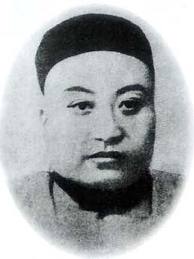 【诗人简介】革命烈士唐才常:
.jpg)
