

|
|
|
|---|
 |
 |
 |
 |
 |
|
 |
|---|
【註】 ① “蹈海”指清末革命先行者陈天华于1905年12月12日在日本东京大森海湾投海自尽,以死报国,时年三十岁。 陈天华蹈海的直接原因是由于当时日本报纸诋毁中国留日学生为“乌合之众”,甚至 “放纵卑劣”。陈在他蹈海前所写的绝命书谈到这些污蔑时说: “ 心痛此言, 欲我同胞时时勿忘此语, 力除此四字, 而做此四字之反面, ‘坚忍奉公’, 力学爱国, 恐同胞之不见听而或忘之, 故以身投东海, 为诸君之纪念。” 陈天华的死,得到了很多人的赞颂。如: 在东京中国留日学生中宣读他的绝命书时, “听者数百人,皆泣下不能仰”。次年闰四月初一,其灵柩经黄兴、禹之谟倡议筹办运回长沙,各界不顾官方阻挠,决定公葬于岳麓山。初七(5月29日)举行葬仪,长沙全城各校师生纷纷参加,送葬队伍达数万人,绵延十余里, 军警站立一旁,亦为之感动,不加干涉。 ②“登楼”句,见本書黄兴诗《蝶恋花--赠侠少年李沛基》第四和第五句。
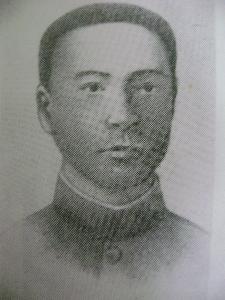
【诗人简介】黄花岗烈士 - 林文,福建侯官(今闽侯)人, 黄花岗七十二烈士之一,和林觉民、林尹民同年生、同年为创建民国而捐躯,并称黄花岗“三林”英烈。祖鸿年曾官云南巡抚。林文素有大志,誓言不早娶妻,为人豪迈任侠。 1905年留学日本,始入成城学校,学习军事,继改入日本大学法科。 1905年8月,参加同盟会,任福建分会会长,孙中山先生深器重之。与黄兴、张继、胡汉民、赵声等最交契。曾任《民报》的经理工作,有著作署名“天讨”。后多次参加同盟会所发动与领导的武装起义,往来于南洋和香港之间。 1911年(宣统三年)应黄兴与赵声之约由日本回国参加广州起义(黄花岗之役)。4月23日潜入广州。27日起义发动,随黄兴当先抵清总督署,即疾扑总督署卫队,冲锋陷阵,锐不可当。及至总督署内,索总督不获。返至东辕门遇李准部下,欲招降清军,挺身而出高呼“汉人不打汉人!”,反被敌枪击中脑部而牺牲。时年仅二十五岁,因其未婚,亲人以其堂侄若霖为后嗣。葬于广州黄花岗,为七十二烈士之一。 Notes: ①'Jumping into the Sea' refers to Chen Tianhua, a revolutionary pioneer in the late Qing Dynasty, who committed suicide by throwing himself into the sea at the Taisen Bay in Tokyo, Japan on December 12, 1905, at the age of thirty, to serve the country with death. The direct reason for Chen Tianhua's reckless behavior was due to Japanese newspapers at that time slandering Chinese students studying in Japan as a "mob" and even "indulging in despicable behavior". When Chen wrote his suicide note before jumping into the sea, he talked about these slanders and said, "I am heartbroken by these words. I urge my compatriots not to forget them at all times, to strive to eliminate these words, and to do the opposite of them. Practise 'Perseverance and dedication to the public', patriotism. I fear that my compatriots may not see or hear them, so I threw myself into the East China Sea as a reminder to all of you." Chen Tianhua's death has been praised by many people. For example, when reading out his suicide note among Chinese students in Tokyo, "hundreds of listeners were moved to tears and unable to stop". Proposed by Huang Xing and Yu Zhimo, on the first day of the fourth lunar month in 1906, his coffin was transported back to Changsha. Despite official obstruction, various sectors decided to publicly bury it on Yuelu Mountain. On May 29th, a funeral ceremony was held, and teachers and students from all schools in Changsha participated one after another. With tens of thousands of people attending the funeral, the procession stretched for more than ten miles. The military and police stood aside and were also moved, without interference. ②For the line “Longing to be back home while up on the tower”, see "To Li Peiji, the Gallant Youth -To the tune of Die Lian Hua" Introduction to the poet: Lin Wen, born in Houguan (now known as Minhou) of Fujian, was one of the 72 martyrs of Huanghuagang Uprising. He was born in the same year as Lin Juemin and Lin Yinmin, and all sacrificed their lives for the founding of the Republic of China. Lin Wen has great aspirations and vows not to get married early. He was a heroic and chivalrous person. In 1905, he studied abroad in Japan and began attending Seijo School to study military affairs. He then switched to studying law at the undergraduate level in Japan. In August 1905, he joined the Chinese Revolutionary Alliance and served as the president of Fujian Branch, he was highly valued by Dr. Sun Yat-sen; most closely related to Huang Xing, Zhang Ji, Hu Hanmin, Zhao Sheng, and others. He worked as a manager of the 《People's Daily》. Later, he participated in the armed uprisings initiated and led by the Alliance for many times, and traveled between Nanyang and Hong Kong. In 1911 (the third year of the Xuantong reign), he returned to China from Japan at the invitation of Huang Xing and Zhao Shengzhi to participate in the Guangzhou Uprising (the Battle of Huanghuagang). He sneaked into Guangzhou on April 23rd. On the 27th, the uprising was launched and together with Huang Xing he arrived at the Qing Governor General's Office first. He immediately rushed to the Governor General's Office's guards Headquarters and charged forward, unstoppable. When it came to the Governor's Office, the Governor was not found. Returning to Dongyuan Gate, he encountered Li Zhun's subordinates and he wanted to call the Qing army to surrender. He stepped forward and shouted, "Han people do not fight Han people!" However, he was shot in the head by the enemy and sacrificed himself at the age of only 25. Due to his unmarried status, his relatives adopted his cousin Ruolin as his heir. Buried in Huanghuagang, Guangzhou, he was one of the seventy-two martyrs.
|
|
|---|
| Contact 联系 | Last Revised
09/27/2025
| |