

|
|
|
|---|
 |
 |
 |
 |
 |
|
 |
|---|
|
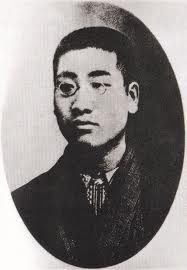
挽刘道一①
【注】
①刘道一(1884-1906),湖南湘潭人。青年时代,追随其兄刘揆一从事革命活动。1904年(光绪三十年)初加入华兴会,与黄兴及兄揆一等联络会党,策划长沙起义。事败后东渡日本,与秋谨等在东京组织秘密革命团体“十人团”。后赴横滨,加入冯自由等组织的“洪门天地会”,任“草鞋”(即将军)。1905年7月参加同盟会,任书记、干事等职。翌年秋,受黄兴委派回国,“运动新军,重振会党”,筹组萍浏醴起义。是年12月,起义爆发,正在长沙运动新军的他在由衡阳返回长沙途中被捕。他在狱中屡遭酷刑,坚不吐实,威武不屈,大义凛然,写下“大地方兴三字狱,但期吾道不终孤。舍身此日吾何惜,救世中天志已虚。”面对严刑拷问,他怒斥道:“士可杀,不可辱,死即死耳!”同年12月31日刘道一被清政府杀害于长沙浏阳门外,英勇就义时年仅22岁。他是留日学生中因反清革命被杀害的第一人,也是同盟会会员中为革命流血牺牲的第一个烈士。著有《衡山正气集》。 【诗人简介】 Notes:
Introduction to the Poet: Sun Yat-sen (November 12, 1866 – March 12, 1925), real name Sun Wen, courtesy name Yixian, from Cuiheng Township, Xiangshan County (now Cuiheng Village, Nanlang Town, Zhongshan City), Guangdong Province, was a modern Chinese politician, revolutionary, and physician. He was a great national hero, patriot, pioneer of the Chinese democratic revolution, founder of the Republic of China and the Kuomintang, advocate of the “Three Principles of the People” and founded the "Five Power Constitution". He was the first person in Chinese history who raised the banner of complete opposition to imperialism and feudalism, “starting the republic and ending the two-thousand-year feudal monarchy” as he advocated. In 1894, Sun Yat-sen established the Xingzhong Society. In 1895, Xingzhong Society launched the Yiwei Guangzhou Uprising. In 1905, the Chinese Revolutionary Alliance (Tongmenghui) was formed in Tokyo, Japan, and Sun Yat-sen was elected Prime Minister. He established the revolutionary program of “expelling the Manchu rulers, restoring China, founding a republic, and equalizing land rights,” put forward the doctrine of the “Three Principles of the People”, and founded 《The People’s Journal (Min Bao)》 to promote the revolution and engage in fierce debates with the reformist faction of the time. Sun Yat-sen expanded revolutionary organizations both at home and abroad, rallying overseas Chinese, secret societies, and the New Army, and launched multiple armed uprisings. On October 10, 1911, the Wuchang Uprising broke out, and provinces across the country responded one after another. On December 29, representatives from seventeen provinces elected Sun Yat-sen as the Provisional President of the Republic of China. On January 1, 1912, he was inaugurated in Nanjing, proclaiming the establishment of the Provisional Government of the Republic of China. By the end of that month, a Provisional Senate was formed, which lasted until February 13. Due to a compromise between the revolutionaries and Yuan Shikai, Sun Yat-sen was compelled to offer his resignation. In March, with the approval of the Provisional Senate, the Provisional Constitution of the Republic of China, drafted under Sun’s leadership, was promulgated. In August, the Tongmenghui (Chinese Revolutionary Alliance) was reorganized into the Kuomintang (Nationalist Party), and Sun Yat-sen was elected as its chairman. After the important leader of the Kuomintang, Sung Chiao-jen, was shot and killed at Shanghai North Station in March 1913, Sun Yat-sen rose up to attack Yuan, but failed immediately. In 1914, Sun Yat-sen established the Chinese Revolutionary Party in Japan and issued two anti-Yuan declarations. In 1917, Duan Qirui dissolved the National Assembly, and Sun Yat-sen held an extraordinary session of the National Assembly in Guangzhou, organizing a military government to protect the law. He was elected as the Grand Marshal and vowed to lead the Northern Expedition. In 1918, Sun Yat-sen was forced to resign to Shanghai due to being coerced by the warlords of the old Guangxi clique and the political science clique. In 1919, Sun Yat-sen founded the magazine 《Construction》, published "Industrial Plan", and reorganized the Chinese Revolutionary Party into the Kuomintang. In 1920, Sun Yat-sen returned to Guangdong and became the Extraordinary President the following year. In 1922, he retreated to Shanghai due to the Chen Jiongming Incident. On March 12, 1925, he passed away in Beijing due to worsening gallbladder cancer。In 1940, the Kuomintang issued a decree calling Sun-Yat-sen the "Father of the Republic of China". The CPC regards him as "a great pioneer of China's democratic revolution, an outstanding patriot and a national hero", and people also call him "an outstanding representative of the Chinese people seeking the truth of saving the country and the people from the West".
|
|
|---|
| Contact 联系 | Last Revised
01/21/2026
| |
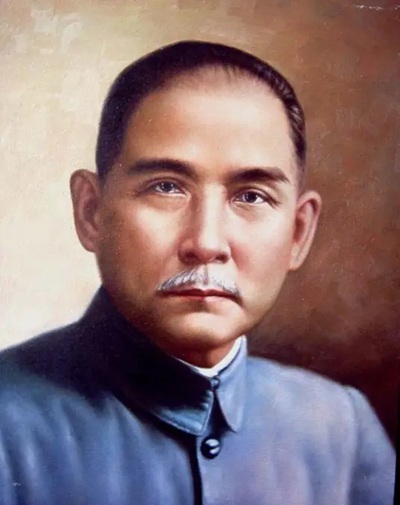 孙中山(1866年11月12日—1925年3月12日),本名孙 文,号逸仙,广东香山县翠亨乡人(今广东省中山市南朗镇翠亨村)。中国近代政治家、革命家、医师。伟大的民族英雄、伟大的爱国主义者、中国民主革命的伟大先驱,中华民国和中国国民党的缔造者,三民主义的倡导者,创立了《五权宪法》。他首举彻底反帝反封建的旗帜,“起共和而终两千年封建帝制”。