

|
|
|
|---|
 |
 |
 |
 |
 |
|
 |
|---|
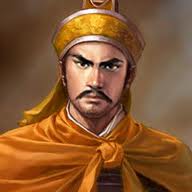
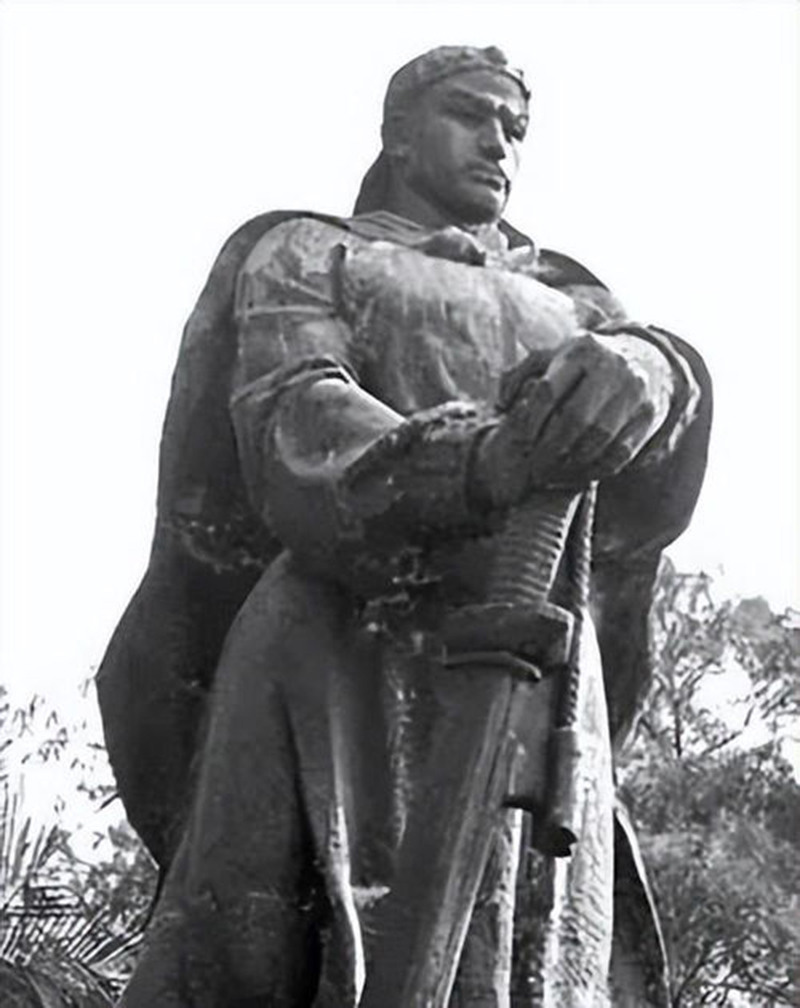
Introduction to the poet: Shi Dakai (1831-1863) was a Hakka from Guixian (now Guigang), Guangxi Province. He was a famous general of the Taiping Heavenly Kingdom, a renowned military strategist, politician, and martial arts master in modern China. He was initially awarded the title of "Left Army General Wing King" and was once awarded the title of " Sacred Spiritual Lightning Corps General Wing King" during the Tianjing Incident. The military and civilians respected him as the "Righteous King" (He humbly declined). Shi Dakai was one of the most legendary figures in the Taiping Heavenly Kingdom. At age of sixteen, he was "invited to come out to be a leader". At nineteen, he commanded a thousand armies, and at twenty, he was crowned king. He died heroically at the age of only thirty-two. Folk legends about him spread throughout most of China where he had fought before his death, demonstrating the deep love and admiration of him among people from all over the country at that time. 【附】 太平天国中最完美的男人
- 石达开
太平天国中最完美的男人,非石达开莫属。他不仅是一位形象很阳光的大帅哥(时人曾赞其曰“龙凤之姿,天日之表”),颇富文韬武略,而且是当时伟大的革命家、政治家、军事家和文学家,其短暂的人生(卒时年仅32岁)迸发出许多闪光点,照亮了太平天国本来乏善可陈的历史天空。
在太平天國的將領中,石達開有很多的美稱,他是太平軍心中靖難平亂的義王,也是清軍眼中陽剛英俊的將領,一句「龍鳳之姿,天日之表」,名貫清軍軍宴。作為天朝翼王,石達開文韜武略冠絕一時,輾轉大江南北,創下輝煌戰績。最終,雖兵敗被俘,依然神情湛然毫無畏懼,凜然一身正氣,令清軍統將都感到震驚。就此,清人以「真奇男子」在青史一簡,為他留下「威儀器量為不可及」的濃濃之筆。 石达开是广西贵县(今贵港)人。生于农家,虽自幼丧父,饱经磨难,但少年时勤于耕读,颇知诗书,尤喜孙子兵法。早年加入拜上帝会。金田起义前夕,即1847年秋,洪秀全和冯云山至贵县访石达开,邀其共图大事。太平天国史志谓之“访石相公”,以“三顾茅庐”喻之。16岁的石达开就这样走上了反对满清腐朽统治的革命道路,并成为革命组织的核心领导人。 1851年金田起义时,石达开率众四千余人赴金田团营,战斗中屡立战功,被封为太平军左军主将、永安封王时受封为翼王五千岁,意为“羽翼中国”。在太平天国首义诸王中,石达开年纪最轻,也最具军事才能,是一位玉树临风、英姿勃勃的少帅。倘若他走在时下的都市街头,一定会有不少少女为他的酷与帅发出尖叫。此时的他,虽已声名赫赫,但从其辉煌无比的整个人生来看,其金戈铁马决胜沙场立功立德的军事生涯才刚刚拉开了序幕。 太平军从广西向金陵进军,途经湖南、湖北、江西、安徽、江苏等省,石达开均为开路先锋,攻城夺镇,所向无敌。尤其是1852年西王萧朝贵在湖南长沙阵亡后,太平军在长沙城下陷入清军反包围,形势万分危急,石达开率部西渡湘江,开辟河西基地,缓解了太平军的缺粮之危,又多次击败进犯之敌,取得“水陆洲大捷”,重挫清军士气,其后,为全军先导,经河西安全撤军,跳出反包围圈,夺岳阳,占武汉,自武昌东下金陵,二十八天挺进一千二百里,战无不胜,攻无不克,令清军闻风丧胆,号之曰“石敢当”。 1853年3月,太平军建都天京(今南京)后,石达开负责天京城的卫戍工作,建立起严密的防御、警戒体系,是一个非常优秀的卫戍区司令。刘继兴考证,定都之后,诸王享乐主义抬头,广选美女,为修王府而毁民宅,据国库财富为己有,唯石达开洁身自好,从不参与,非常之难能可贵。 1853年秋,石达开奉命出镇安庆,节制西征,他打破太平天国以往重视攻占城池、轻视根据地建设的传统,采取稳扎稳打的策略,逐步扩大根据地范围,亲自指挥攻克清安徽临时省会庐州(今合肥),迫使守城名将江忠源兵败自尽。 在安徽,石达开展现出了超人的政治才能。过去,太平天国没有基层政府,地方行政一片空白,石达开到安徽后,很快组织各地人民登记户口,选举基层官吏,又开科举试,招揽人才,建立起省、郡、县三级地方行政体系,使太平天国真正具备了国家的规模;与此同时,整肃军纪,恢复治安,赈济贫困,慰问疾苦,使士农工商各安其业,并制定税法,征收税赋,为太平天国的政治、军事活动提供所需物资。1854年初,石达开在安徽人民的赞颂声中离开安徽,回京述职,太平天国领导层对他的政治实践给予充分肯定,从此放弃了绝对平均主义的空想,全面推行符合实情的经济政策。 1854年夏秋,太平军在西征战场遭遇湘军的凶狠反扑,节节败退,失地千里。石达开看出两军之差距在于水师,便命人仿照湘军的船式来造舰,加紧操练水师。在湘军兵锋直逼九江的危急时刻,石达开再度出任西征军主帅,亲赴前敌指挥,于1855年初在湖口、九江两次大败湘军,湘军水师溃不成军,统帅曾国藩投水自尽,被部下救起,西线军事步入全盛。同年秋天,石达开又挥师江西,四个月连下七府四十七县。由于他军纪严明,施政务实,爱护百姓,求贤若渴,江西人民争相拥戴,许多原本对太平天国不友好的知识分子也转而支持太平军,队伍很快从一万多人扩充到十万余众,敌人哀叹“民心全变,大势已去”。 1856年3月,石达开在江西大败湘军,至此,湘军统帅曾国藩所在的南昌城已经陷入太平军铜墙铁壁的四面合围,对外联络全被切断,可惜石达开于此时被调回天京参加解围战。接下来石达开又大破江南大营,解除了清军对天京三年的包围。 同年9月,太平天国领导集团内部矛盾激化,天京爆发内讧,东王杨秀清及其部下2万余人被杀害。石达开闻讯,从湖北赶回天京,因严责韦昌辉滥杀无辜,将被加害,即缒城逃出天京,但家眷被杀。到安庆后,便起兵回京靖难。天王洪秀全迫于形势,处死韦昌辉,并诏令石达开回京辅政。石达开回天京后,深受满朝文武拥戴,被尊为“义王”。在石达开的部署下,太平军稳守要隘,伺机反攻,陈玉成、李秀成、杨辅清、石镇吉等后起之秀开始走上一线,独当一面,内讧造成的被动局面逐渐得到扭转。但天王洪秀全见石达开深得人心,心生疑忌,对石达开百般牵制,甚至意图加害。 为了避免再次爆发内讧,石达开不得已于1857年5月离京避祸,先后转战于浙江、江西、湖南、广西、贵州、云南、四川等地。在建立四川根据地的过程中,先后四进四川。1863年5月,太平军到达大渡河,对岸尚无清军,石达开下令多备船筏,次日渡河,但当晚天降大雨,河水暴涨,无法行船。三日后,清军陆续赶到布防,太平军为大渡河百年不遇的提前涨水所阻,多次抢渡不成,粮草用尽,陷入绝境。为求建立“生擒石达开”的奇功,四川总督骆秉章遣使劝降,石达开决心舍命以全三军,经双方谈判,由太平军自行遣散四千人,这些人大多得以逃生。剩余两千人保留武器,随石达开进入清营,石达开被押往成都后,清军背信弃义,石达开麾下两千将士全部战死。 1863年(同治二年)6月27日,石达开在成都公堂受审,他慷慨陈词,令主审官崇实理屈词穷,无言以对。骆秉章率领清兵把石达开和宰辅曾仕和、中丞黄再忠等绑赴刑场。石、曾二人分别被面对面缚在两个十字木桩上。执行凌迟时,刽子手先对曾仕和割第一刀,曾仕和受疼不过,惨叫狂呼,石达开斥责他说:“为什么不能忍受此须臾时间?”曾仕和这才咬紧牙关,不再叫喊。石达开受刑时,被割一百多刀,他从始至终默然无声。石达开的凛然正气和坚强意志使清军官兵感到震惊,观者无不动容,叹为“奇男子”。连敌对势力的四川布政使刘蓉,都不得不如此赞他“枭桀坚强之气溢于颜面,而词句不亢不卑,不作摇尾乞怜语。……临刑之际,神色怡然,实丑类之最悍者。” 时人对石达开都十分推崇,如李秀成谈及各王优劣才能时“皆云中中,而独服石王,言其谋略甚深”。陈玉成认为太平军将领“皆非将才,独冯云山石达开差可耳”。曾国藩说“查贼渠以石为最悍,其诳煽莠民,张大声势,亦以石为最谲”,左宗棠说他“狡悍着闻,素得群贼之心,其才智诸贼之上,而观其所为,颇以结人心,求人才为急,不甚附会邪教俚说,是贼之宗主而我之所畏忌也”,骆秉章说他“能以狡黠收拾人心,又能以凶威钤制其众”,是“首恶中最狡悍善战”。清朝一位贡生在湘军军宴上公开说他有“龙凤之姿,天日之表”,地主文人周洵在《蜀海丛谈》中称其为“奇男子”,直到石达开死去近40年后,另一位地主文人所撰的着作《江表忠略》之中还有这样的记叙:“至今江淮间犹称……石达开威仪器量为不可及。” 连同美国传教士麦高文在其通讯中也如此称赞石达开:“这位青年领袖,作为目前太平军的中坚人物,各种报道都把他描述成为英雄侠义的--勇敢无畏,正直耿介,无可非议,可以说是太平军中的培雅得(法国着名将领和民族英雄)。他性情温厚,赢得万众的爱戴……”
The Most Perfect Man in the Taiping Heavenly Kingdom – Shi DakaiAmong the leaders of the Taiping Heavenly Kingdom, the most perfect man was none other than Shi Dakai. He was not only a strikingly handsome figure with a sunny, vigorous demeanor (praised in his time as having “the bearing of a dragon and phoenix, the appearance of heaven and sun”), but also gifted in both civil and military strategy. More than that, he was a great revolutionary, statesman, general, and man of letters of his era. His brief life—he died at just 32—flashed with brilliance, illuminating an otherwise lackluster sky of the Taiping Heavenly Kingdom. Among Taiping generals, Shi Dakai enjoyed many honorifics. To Taiping soldiers he was the righteous “Prince of Loyalty and Justice” who rose to pacify turmoil; to the Qing army, he was a valiant and handsome commander. The phrase “a bearing like dragon and phoenix, a presence radiant as heaven and sun” became renowned even at Qing military banquets. As the Wing King of the Taiping court, Shi Dakai’s mastery of both civil strategy and military command was unmatched in his time. He moved across the great rivers and lands of the South, achieving brilliant victories. In the end, though defeated and captured, he remained calm and fearless; his upright spirit awe-inspiring, so much so that even the Qing commanders were taken aback. Thus the Qing chroniclers recorded him in history as a “truly remarkable man,” leaving behind the enduring praise that his dignity and magnanimity were “beyond compare.” Shi Dakai was from Guixian(today’s Guigang), Guangxi Province. Born into a farming family, he lost his father young and endured hardship, but as a boy he was diligent in farming and reading, well-versed in poetry and books, and particularly fond of Sunzi’s 《Art of War》. In his youth he joined the Society of God-Worshippers. On the eve of the Jintian Uprising, in autumn 1847, Hong Xiuquan and Feng Yunshan visited Shi Dakai in Guixian to enlist him in their great cause. Taiping records call this “the visit to Master Shi,” likening it to “three visits to the thatched hut.” Thus at age 16, Shi Dakai set out on the revolutionary road against the corrupt Manchu Qing, becoming a core leader of the movement. In 1851, when the Jintian Uprising broke out, Shi Dakai led more than 4,000 men to join, winning repeated victories in battle. He was made commander of the Taiping Left- army, and when the kingdom was proclaimed at Yong’an, he was enfeoffed as Wing King with the title of “Five-Thousand-Year Sovereign,” meaning “wings of China.” Among the founding Taiping kings, he was the youngest and most gifted in military command—a dashing, gallant young general. If he walked down the streets of a modern city, he would surely set young girls screaming for his cool and striking looks. At this time he was already famed, but in truth his glorious career of battlefield exploits and achievements had only just begun. As the Taiping forces advanced from Guangxi to Nanjing, through Hunan, Hubei, Jiangxi, Anhui, and Jiangsu, Shi Dakai was always the vanguard, storming cities and sweeping aside all opposition. After the death of the West King Xiao Chaogui at Changsha in 1852, when the Taiping were besieged and in dire straits, Shi Dakai led his troops across the Xiang River to open up a base west of the river, alleviating the army’s grain shortage. He defeated the enemy repeatedly, won the great victory at Shuiluzhou, shattered Qing morale, and then skillfully led the army out of the encirclement, capturing Yueyang and Wuhan, and pressing down the Yangtze to Nanjing—marching 1,200 li in 28 days, invincible in battle. The Qing called him “Shi Gandang” (“Shi the Indomitable”). In March 1853, after the Taiping established their capital at Tianjing (today’s Nanjing), Shi Dakai was responsible for its defense, built a strict and effective security system, he indeed was an excellent commander of the garrison. According to researcher Liu Jixing, while other kings after settling in the capital indulged in pleasure, seized wealth, and oppressed the people, Shi Dakai remained upright, never taking part, that's something very rare and precious. That autumn, he was ordered to Anqing to command the Western Expedition. Breaking with the Taiping tradition of focusing only on capturing cities, he adopted a steady, pragmatic strategy, expanding the base step by step. He personally directed the capture of Luzhou (today’s Hefei), forcing its famous commander Jiang Zhongyuan to commit suicide. In Anhui, Shi Dakai displayed extraordinary political talent. Previously, the Taiping had no local administration. Shi quickly organized household registration, local elections, civil examinations to recruit talent, and established a three-tier system of provincial, prefectural, and county governments—making the Taiping regime take shape as a true state. He also enforced discipline, restored order, provided relief, supported livelihoods, and set up taxation to supply the army. When he left Anhui in early 1854, he was praised by the people, and Taiping leaders, impressed by his success, abandoned their utopian egalitarianism and adopted realistic economic policies. In 1855, facing fierce Hunan Army counterattacks, Shi saw their advantage lay in their navy, so he built ships in their style and trained his own fleet. Personally leading at Hukou and Jiujiang, he twice smashed Zeng Guofan’s forces, nearly driving Zeng to drown himself. The Taiping regained momentum, and Shi led sweeping campaigns through Jiangxi, capturing seven prefectures and forty-seven counties in four months. His discipline and benevolence won overwhelming popular support, swelling his ranks from tens of thousands to over 100,000. Even Qing sources lamented, “The people’s hearts have changed; the tide is lost.” By 1856, Shi had once again crushed Qing armies, nearly capturing Nanchang where Zeng Guofan was trapped. But then he was recalled to Tianjing to relieve the capital, breaking the three-year siege. Soon after, however, civil war erupted within the Taiping leadership: the Eastern King Yang Xiuqing was killed with 20,000 followers. Shi hurried back, condemned Wei Changhui’s massacre, and narrowly escaped with his life—though his family was slaughtered. Back in Tianjing, he was restored to power, honored as the “Prince of Loyalty and Justice.” Under his reorganization, young generals Chen Yucheng and Li Xiucheng rose to prominence, and the situation stabilized. But Hong Xiuquan grew jealous of Shi’s popularity and plotted against him. To avoid further bloodshed, Shi reluctantly left Nanjing in 1857, campaigning in Zhejiang, Jiangxi, Hunan, Guangxi, Guizhou, Yunnan, and Sichuan. He made four attempts to establish a base in Sichuan. In May 1863, his army reached the Dadu River. That night torrential rains caused the river to flood, blocking their crossing. Days later the Qing arrived, and the Taiping, starving and trapped, were forced into negotiation. Shi agreed to sacrifice himself to save his men: 4,000 were released and mostly escaped, while he and 2,000 troops surrendered, only to be betrayed and massacred. On June 27, 1863, Shi was tried in Chengdu. His fearless defense left officials speechless. He and his lieutenants were bound to wooden crosses and executed by slow slicing. While one of his comrades cried out in pain, Shi rebuked him: “Why can’t you endure for just this brief moment?” He himself endured more than a hundred cuts in silence, never uttering a sound. His dignity and courage stunned even the executioners and moved all onlookers. Even the hostile Sichuan official Liu Rong admitted: “His fierce, unyielding spirit overflowed from his face; his words were neither arrogant nor servile, without a trace of pleading. At the moment of death, he was serene—truly the most formidable of men.” Contemporaries all admired him. Li Xiucheng admitted, “Among the kings, all are average, except I admire King Shi, whose strategies are profound.” Chen Yucheng said, “None of the generals are true commanders, except perhaps Feng Yunshan and Shi Dakai.” Even his enemies respected him: Zeng Guofan called him “the most valiant and the most cunning in spreading influence”; Zuo Zongtang said he “won men’s hearts, sought talent, and was above the rest”; Viceroy Luo Bingzhang called him “the most cunning and fierce among the leaders.” A Qing scholar at a Hunan Army banquet praised him as “with the bearing of a dragon and phoenix, the countenance of heaven and sun.” Later writers still called him a “remarkable man,” saying, “Even today, his majesty and magnanimity remain unsurpassed.” Even the American missionary Augustus Lindley wrote admiringly: “This young leader, the backbone of the Taiping, is described everywhere as a heroic knight—brave and fearless, upright and uncompromising, beyond reproach. One may call him the Bayard (the famous French knight and national hero) of the Taiping. His gentle nature wins the love of all.”
|
|
|---|
| Contact 联系 | Last Revised
09/27/2025
| |