Song of Women's Rights
by Qiu Jin
(Written in 1905)
We all cherish freedom dearly,
Let us welcome the liberty with a cup of wine.
Equality of men and women is Heaven’s gift,
Why we should resign to trail behind like oxen!
We will rise with courage for our rights,
And wash away the stains of past humiliation.
If you'd like to join me as my compeers,
We shall restore our nation with our own fair hands.
Old customs bring the deepest shame,
Women treated as cattle and horses.
Yet now dawn breaks with the light of civilization,
To be independent is foremost for us.
May all enslaving ways of living be torn away,
We will be tempered through studies and knowledge.
With duty borne upon our shoulders,
Let us not fail the hope of becoming heroines of the nation.
鹧 鸪 天
(作于约 一九0四年)
祖国沉沦感不尽,闲来海外觅知音。
金瓯已缺总须补,为国牺牲敢惜身!
嗟险阻,叹飘零,关山万里作雄行。
休言女子非英物,夜夜龙泉壁上鸣。
To the Tune of Zhe Gu Tian
(Written in ca 1904)
The motherland's crumbling stirs my endless grief,
In exile abroad I seek kindred hearts.
The sundered motherland must surely be restored,
For my country’s sake how could I spare my life!
Alas, the perils, lamenting the wandering,
Marching with valor I travel thousands of miles of mountains and passes.
Do not say women are not heroic enough,
The Dragon-Spring sword resounds upon the wall each night.
黄海舟中日人索句并见日俄战争地图
万里乘云去复来,只身东海挟春雷。忍看图画移颜色,肯使江山付劫灰。
浊酒不销忧国泪,救时应仗出群才。拼将十万头颅血,须把乾坤力挽回。
On the Yellow Sea, in Response to a Japanese Request for a Poem, While Viewing a Map of the Russo-Japanese War
Across ten thousand miles I ride the clouds coming and going,
Alone on the sea in the east hearing the springtime thunder.
How can I bear to watch the colors shift upon a painted map?
How could I let my rivers and mountains fall to ashes of catastrophe?
A cup of harsh wine cannot dissolve my tears for the nation’s fate;
To save the nation, one must rely on talents that rise above the crowd.
I would stake a hundred thousand heads’ worth of blood,
To wrench the heavens and earth back to us with will and power.
感怀
莽莽神州叹陆沉,救时无计愧偷生。抟沙有愿兴亡楚,博浪无椎击暴秦【注】。
国破方知人种贱,义高不碍客囊贫。经营恨未酬同志,把剑悲歌涕泪横。
Reflections on Current Affairs
Vast and wild, I sigh as China sinks into ruin,
No plan to save the Divine Land, ashamed I linger on a stolen life.
I would mold sand with my bare hands to revive fallen Chu,
Yet lack the iron hammer of Bolang to strike down tyrant Qin Emperor.
Only when the state is shattered do we learn how lowly our people are;
Lofty righteousness is no hindrance for a wanderer’s empty purse.
I grieve that my long labors have not repaid my comrades’ trust,
Sword in hand, I sing in sorrow, tears streaming down my face.
感时
炼石无方乞女娲,白驹过隙感韶华。瓜分惨祸依眉睫,呼告徒劳费齿牙。
祖国陆沉人有责,天涯飘泊我无家。一腔热血愁回首,肠断难为五月花。
Reflections on the Times
With no way to refine the stones, I beg in vain of Nüwa;
A white colt flashes past a crack, my youthful years are gone.
The calamity of national partition looms before our very eyes;
Appeals and cries are wasted breath, all in vain.
When the homeland sinks, responsibility rests with every soul;
Adrift at the ends of the earth, I have no home of my own.
A heart full of hot blood, I look back in grief;
My guts are torn: how can I become a Mayflower?
【注】此句暗指博浪沙刺杀秦始皇未遂之事,象征着无力反抗暴政。见《蝶恋花—辛亥秋哭黄诸烈士(外三首)》【注】②
Note: This line alludes to the failed assassination attempt on Qin Shi Huang at Bolangsha, symbolizing the lack of means to strike tyranny. See 《Elegy for the Huanghuagang Martyrs- To the tune of Die Luan Hua》Note ②.
【诗人简介】
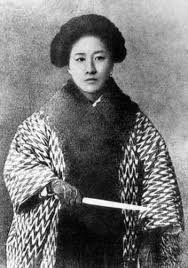 秋瑾(1877—1907),浙江山阴(今绍兴)人,号竞雄,近代杰出的女革命家、作家。自幼爱读书,工诗文,好骑马击剑。1896年依父命嫁湘潭富绅子王廷钧。1900年秋瑾随王入京,时值八国联军侵华不久,目睹了中华民族危机的深重和清廷的腐败,决心投身革命救国事业!1904年冲破封建家庭的阻扰去日本东京留学,曾参加共爱会、三合会等组织。 秋瑾(1877—1907),浙江山阴(今绍兴)人,号竞雄,近代杰出的女革命家、作家。自幼爱读书,工诗文,好骑马击剑。1896年依父命嫁湘潭富绅子王廷钧。1900年秋瑾随王入京,时值八国联军侵华不久,目睹了中华民族危机的深重和清廷的腐败,决心投身革命救国事业!1904年冲破封建家庭的阻扰去日本东京留学,曾参加共爱会、三合会等组织。
1905年6月回国后由徐锡麟介绍加入光复会。7月15日再东渡日本,8月经冯自由、黄元秀介绍加入了由孙中山等创立才半个月的中国同盟会。1906年2月,为抗议日本文部省于上年11月2日颁发的《清国留日学生取缔规则》而回国。据徐双韵《忆秋瑾》一文所记载,回国前,秋瑾曾在陈天华追悼会上发言。“秋瑾发言,力主回国,词意激昂,随手从靴筒取出倭刀,插在讲台上说:‘如有人回到祖国,投降满虏,卖友求荣,欺压汉人,吃我一刀。’” 她显然是表达回国反清的立场,对决定不回国的同志表示其回国之举并非投降。1907年1月在上海创办《中国女报》。3月间回绍兴府,与徐锡麟等创办明道女子学堂。不久又主持大通学堂(1905年徐锡麟等创办,后作为绍兴光复会总机关)体育专修科,并任学堂督办。
大约从1907年春开始筹资准备于7月由金华府起义,呼应徐锡麟在安庆起义。7月1日至7月4日,武义、金华、永康等地先后发生光复军起义,但均告失败。7月6日,徐锡麟在安庆刺杀安徽省巡抚恩铭,被捕后旋被杀,安庆起义遂告失败;由于叛徒告密,秋瑾被牵连。很多人劝告秋瑾离开绍兴,但她拒绝离开,认为“革命要流血才会成功”。
浙江巡抚张曾扬,知悉徐锡麟与绍兴大通学堂督办秋瑾乃为同党,当即急电绍兴府知府贵福,派山阴县令李锺岳查封大通学堂。7月14日,李锺岳带领标兵、管带到大通学校查抄。人马刚至时,校门紧闭,校内有枪还击,李在轿内,大声喊话: “本县在此,大家放心,无须开枪。” 军士遂破校门而入。 因放暑假,这次查抄只逮到秋瑾和8名学生,并搜出枪数十支,子弹若干。
次日,贵福责令李锺岳派人到绍兴城外秋瑾母亲家查抄,一无所获。秋瑾被关押在卧龙山(即府山)监狱。贵福、李锺岳及会稽县令李瑞年,行三堂会审。秋瑾口供仅写“秋风秋雨愁煞人”一诗句。随后,李锺岳即到绍兴府向贵福报告审讯情形。见到秋瑾坚定保护其他仁人志士不受牵连的立场,使得贵福恼羞成怒必杀秋瑾而后快。贵福当晚赴杭,向张曾扬作假报告,说秋瑾对造反之罪,业已供认不讳。张令立即处决。7月15日凌晨三、四时,于绍兴古轩亭口秋瑾被五花大绑着处斩。秋瑾为推翻腐朽清王朝献出年轻的生命,时年31岁。
涉杀害秋瑾的三位清吏均无善终;张曾扬下令处决秋瑾激起全国舆论激烈反对,在国人谴责声中忧惧成疾,辞官回籍。县令李钟岳自缢身亡,留言说,“自思既负贵福,又负秋瑾,一时愧悔交并,遂自缢死”。贵福投奔日本傀儡溥仪,被人暗杀。
1912年,秋瑾遗骨迁至江杭县西湖西泠桥畔,墓旁修建“风雨亭”,亭以秋瑾临刑前绝笔句而得名。大门使用红砖砌成。1月26日,徐自华等人,在大善寺开追悼秋瑾大会。该年12月10日,孙中山亲至秋墓祭悼,并撰题挽联,称其“侠女魂”。1981年,秋瑾墓在西泠桥另一端重建,塑汉白玉全身像,并镌有孙中山的手迹 “巾帼英雄”。 秋瑾就义已逾百年。一个多世纪过去了,秋瑾宁愿牺牲自己也要唤醒民众的伟大精神,依然在支撑着我们民族的灵魂。
Introduction to the poet: Qiu Jin (1877-1907), born in Shanyin (now Shaoxing), Zhejiang Province, was also known as Jingxiong, an outstanding female revolutionary and writer in modern times. She loved reading since young, skilled in poetry and literature. She was also good at horseback riding and fencing. In 1896, she married Wang Tingjun, the son of a wealthy gentleman in Xiangtan of Hunan Province, according to his father's will. In 1900, Qiu Jin accompanied Wang to Beijing. At that time, shortly after the invasion of China by the Eight-Nation Alliance, she witnessed the profound crisis of the Chinese nation and the corruption of the Qing court. She was determined to devote herself to the cause of revolutionary salvation. In 1904, she broke through the obstruction of feudal families and went to Tokyo, Japan, to study. She joined organizations such as the Common Love Society and Triad Society. In 1905, Qiu Jin returned to China and was introduced to join the Restoration Society by Xu Xilin in June. On July 15, she made another eastward trip to Japan. In August, introduced by Feng Zifang and Huang Yuanxiu, Qiu Jin joined the Chinese Revolutionary Alliance (Tongmenghui), which was founded by Sun Yat-sen and others only half a month before.
In February 1906, she returned to China to protest the "Regulations on the Prohibition of Qing Dynasty Students in Japan" issued by the Japanese Ministry of Education on November 2 the year before. Before her return, at a memorial service for Chen Tianhua according to Xu Shuangyun's article 《Remembering Qiu Jin》, "Qiu Jin spoke strongly and advocated returning to China. Her words were passionate, and she casually took out a Japanese sword from her boots and inserted it into the podium, saying, 'If someone returns to their motherland, surrenders to the Manchu invaders, sells their friends for glory, and bullies the Han people,taste my blade!' " This clearly expresses her stance of returning to China to oppose the Qing Dynasty and indicates to comrades who had decided not to return that her return to China was not a surrender. In January 1907, she founded the 《Chinese Women's Newspaper》 in Shanghai. In March, she returned to Shaoxing Prefecture and, along with Xu Xilin and others, founded the Mingdao Girls School. Soon after, she took charge of the physical education department at Datong School (founded by Xu Xilin and others in 1905 and later serving as the headquarters of the Shaoxing Restoration Society) and served as the school's supervisor. Around the spring of 1907, preparations began for an uprising in Jinhua Prefecture scheduled in July the same year, echoing Xu Xilin's uprising in Anqing. From July 1st to July 4th, uprisings by the Restoration Army took place in Wuyi, Jinhua, Yongkang, and other places, but all failed. On July 6th, Xu Xilin assassinated Anhui Governor En Ming in Anqing. He was arrested and subsequently killed, thus ending the Anqing Uprising. Due to a traitor’s confession Qiu Jin was implicated in the case. Qiu Jin was advised to leave Shaoxing, but she refused, believing that "revolution can only succeed if blood is shed." The news reached Zhang Zengyang, the governor of Zhejiang Province, he learned that Xu Xilin and Qiu Jin, the director of Shaoxing Datong School, were in cahoots. He immediately telegraphed Shaoxing Prefecture Governor Guifu, ordering Shanyin County Magistrate Li Zhongyue to seal off Datong School. On July 14, Li Zhongyue led model soldiers and a supervisor to the school for a raid. Upon their arrival, the school gates were locked, and gunfire came from inside. Li, from his sedan chair, shouted, "The county magistrate is here. Don't worry, there's no need to fire." The soldiers then broke down the gates. Because it was summer vacation, only Qiu Jin and eight students were arrested, and dozens of guns and some bullets were seized during the raid.The next day, Guifu ordered Li Zhongyue to send someone to investigate and seize Qiu Jin's mother's house outside Shaoxing City but achieved nothing. Qiu Jin was detained in Wolongshan (also known as Fushan) Prison. Guifu, Li Zhongyue, and Li Ruinian, the magistrate of Kuaiji County, the three officials staged a joint interrogating of Qiu Jin. Qiu Jin only wrote this line as her confession: " Autumn winds and rains, how bitterly they grieve the heart!". Subsequently, Li Zhongyue went to Shaoxing Prefecture to report the interrogation situation to Gui Fu. Seeing Qiu Jin's firm stance to protect other righteous individuals from being implicated in her case, Gui Fu decided to kill Qiu Jin quickly. Gui Fu went to Hangzhou that night and falsely reported to Zhang Zengyang that Qiu Jin had confessed to the crime of rebellion, and Zhang ordered immediate execution. On the early morning of July 15th at 3 or 4 o'clock, she was tied up and beheaded at the entrance of Gu Xuanting Pavilion in Shaoxing. Qiu Jin sacrificed her young life for the overthrow of the decaying Qing dynasty at the age of 31。The three Qing officials involved in the killing of Qiu Jin all met unfortunate ends. Zhang Zengyang's murder of Qiu Jin sparked fierce opposition from the national public opinion, and amidst the condemnation, he became worried and sick, he therefore resigned from his official position in Zhejiang to return home. County Magistrate Li Zhongyue hanged himself, leaving a note saying, "Reflecting on how I have failed both Guifu and Qiu Jin, I am overwhelmed with shame and remorse, and thus I hanged myself." Guifu defected to the Japanese puppet regime of Puyi and was later assassinated.In 1912, the remains of Qiu Jin were relocated to the cemetery by Xiling Bridge in West Lake, Jianghang County, Zhejiang Province. A pavilion called "Wind and Rain" was built next to the tomb, named after Qiu Jin's last words before her martyrdom. The gate was made of red bricks. On January 26th, Xu Zihua and others held a memorial service for Qiu Jin at Dashan Temple. On December 10, 1912, Sun Yat-sen went to Qiu Jin's tomb to mourn in person and wrote an elegiac couplet praising her as "chivalrous woman". In 1981, Qiu Jin's tomb was rebuilt at the other end of Xiling Bridge, with a White Marble full body statue engraved with Sun Yat-sen's handwriting "Heroine". More than a century has passed since Qiu Jin’s martyrdom, but the great spirit in her willingness to sacrifice herself to awaken the people still sustains the soul of our nation.
|