

|
|
|
|---|
 |
 |
 |
 |
 |
|
 |
|---|
|
赠吴樾二首
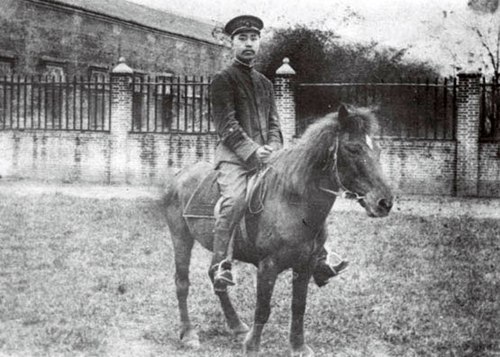
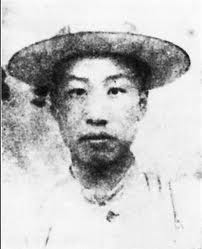
吴樾自加入暗杀团后,以民族解放、光复汉室为己任,精练各种技术。洽逢清廷为了敷衍求变的潮流,乃同意君主立宪,先派五大臣出国考察,搜集资料。吴樾为撕破满清政府假立宪的骗局,而“宁牺牲一己之肉体。”并说:“予愿死后,化一我为千万我,前者仆而后者继,予之死为有济也。”遂决定行刺五大臣,在火车站动手。吴先与秋瑾至前门火车站踩点,后秋瑾先回南方筹备,吴樾写好了一纸遗嘱交给她,说:“不成功,便成仁。不达目的,誓不生还。”吴樾驰书未婚妻子,抛开个人私情,从容论述生死大义。函中要求未婚妻学习法国罗兰夫人(Madame Roland,原名Marie- Jeanne Phlipon,1754-1793)。樾给未婚妻的信可以看出,他们两人对激烈行动、暗杀计划有过讨论,夫人亦赋诗三绝以壮其行。 1905年9月24日,辅国公载泽、兵部侍郎徐世昌、户部侍郎戴鸿慈、湖南巡抚端方、商部右丞绍英,五大臣正式出洋考察。在此前一天,吴樾由随同五大臣一同出国考察卧底的杨笃生那里得知了详细的出行计划,与同志张榕在安徽会馆设宴招待各方友人,席间慷慨悲歌,举止豪放,有人不解其义,问之,云不日将有所图,人皆赞之。庶日怀揣杨笃生事先制好的炸弹离开会馆,留置一信于枕下,详书其此次行动的缘由,并说与会馆众人无关。以便万一事泄,不托累旁人。五大臣原定十点出发,铁八点刚过,送行的人陆续到达。首先到的是徐世昌,接着是绍英、端方、戴鸿慈,最后到的是载泽。吴樾穿的是学堂的操衣,被拦不得入内。他急购一套清隶仆役的衣服;蓝布薄棉袍,皂靴,无花陵的红缨帽。混入仆役之中进入车站上了第四列车,张榕在他的身后,因送站的人多,被隔在了远处。在试图由第四列车箱进入中间花车五大臣包厢的时候,被卫兵拦住,因他口音不是北方话,引起了卫士的怀疑,正纠缠间,又上来几个兵卒。吴樾见此就冲进花车,借火车开动之际引爆身上的炸药与五大臣同归于尽。电光闪过,倒退车头接上了车厢,力量猛了些,五节车一齐大震,砰然巨响,车厢顶上开了花,硝烟之中飞起来碎木片、鲜血、断手、断足,哗啦哗啦地落在车厢顶上,好一会才停。共毙伤数十人,内有端方亲属,徐世昌,戴鸿慈因有仆人王是春在前颈受轻伤,顶带花翎皆被削去。绍英受伤较重,载泽用一只受伤的血手,摸着自己的脖子问:“我的脑袋呢?”烈士吴樾当场殉节。张榕因离得较远,加之杨笃生掩护,趁着混乱脱险。 事后,京师全城戒严,慈禧一面下令追查,一面传旨为防止有人携炸弹等物潜入颐和园,故将围墙在原有高度上又增加三尺有余。 烈士成仁后,被满清抛尸荒野,幸有志士金某保全尸骸。民国后,吴樾之弟询其遗体以公葬,蔡元培主祭。安徽有义士修吴樾路于安庆中心,以兹纪念。吴之未婚妻得悉夫君殉国,慷慨自刎以殉。 另按清制,犯人的名字中要加一偏旁部首,以示污辱。吴樾名字中的“樾”之“木”即为此故而加,然今日,“樾”字反而体现其精神之光荣,故而文中皆用“樾”字。 吴樾刺五大臣的事迹迅述传遍天下,同盟会的天讨号增刊把他的遗著全部发表,追认他为盟友。 【詩人簡介】赵声(1881年3月16日—1911年5月18日), 中國近代民族革命運動先驅。江苏丹徒(今镇江)大港镇人,擅武艺,枪法尤精,左手枪百步穿杨,精诗文,曾组织南京鼓楼岗附近的北极阁集会,开创了中华大地利用聚会和公开演说形式,鼓动革命,抨击时弊,宣传群众的先河,并作《保国歌》“莫打鼓来莫打锣,听我唱个保国歌;中国汉人之中国,民族由来最众多……仔细听我保国歌,天和地和人又和,取彼民贼驱异类,光复皇汉笑呵呵!”《 保國歌》全文共134句,近千字,语言激昂慷慨,读了悲壮感人, 和陈天华的《警世钟》、《猛回头》以及邹容的《革命军》一样,对于唤起民众起到了巨大的宣传推动作用。1903年2月,东渡日本考察,与黄兴结识,同年夏回国,任南京两江师范教员和长沙实业学堂监督,积极宣传革命思想。1909年10月,担任广州起义总指挥,并制定具体计划。1910年6月底,与孙中山、黄兴在南洋商决大举之策。1911年3月29日率部赶往广州参加起义未遂。5月18日,怀着壮志未酬的悲愤溘然长逝,年仅30岁。 Introduction to the revolutionary martyr Wu Yue: Wu Yue (1878-1905) came from a poor family, fond of ancient poetry and literature from a young age. He was extremely averse to the Eight-legged essay writing and refused to enter the officialdom. At the age of 20, he traveled eastward to Shanghai area and Zhejiang; he witnessed the "trend of civilization" in Southern China. Later, recommended by his uncle Wu Rulun, he was enrolled in Baoding Higher School in 1902 and read revolutionary books extensively. As his thoughts changed, he shifted from constitutionalism to liberation, and from then on, he formed a wide circle of intellectual best friends include Chen Tianhua from Hunan, Yang Dusheng, Zhao Sheng from Jiangsu, Zhang Rong from Shandong, Cai Yuanpei from Zhejiang, Zhang Binglin, Qiu Jin, and Chen Duxiu from Anhui. Whenever he met them, he always have a thorough conversation till deep into the night and couldn't sleep. Under the introduction of Zhao Sheng and Yang Dusheng, Wu Yue was sworn by Yang Jian to join the revolutionary organization "Northern Assassination Group" as a branch minister, and was introduced by Cai Yuanpei to join the Restoration Society. After joining the assassination squad, Wu Yue took it upon himself to liberate the nation and restore the Han dynasty, refining various techniques. In order to appease the trend of seeking change, the Qing court agreed to establish a constitutional monarchy and first sent five ministers abroad to investigate and collect information. Wu Yue, in order to tear apart the false constitutional fraud of the Qing government, said "I would rather sacrifice my own body." He also said, "After I die, my death will transform me into millions of me, the former serving and the latter continuing, therefore my death is a blessing." Therefore, he decided to assassinate the five ministers and took action at the train station. Wu Xian and Qiu Jin went to Qianmen Railway Station to scout, and later Qiu Jin returned to the south to prepare. Wu Yue wrote a will and handed it to her, saying, "Succeed or die trying. If I don't achieve the goal, I swear I won't return alive." Wu waited for the opportunity at the Anhui Guild Hall in Beijing. In the letter written for his fiancée, Wu told her to set aside personal feelings and calmly discussing the righteousness of life and death. The letter requests that the fiancée learn from Madame Roland from France (Marie-Jeanne Phlipon, 1754-1793). From the letters Wu Yue sent to his fiancée, it can be seen that they had discussed intense actions and assassination plans, and his wife also wrote three poems to enhance his actions. On September 24, 1905, Duke to Assist the State Zai Ze, Minister of War Xu Shichang, Minister of Revenue Dai Hongci, Hunan Governor Duan Fang, and Minister of Commerce Shao Ying, along with five other ministers, officially went abroad for inspection. The day before, Wu Yue learned detailed travel plans from Yang Dusheng, who as undercover was accompanying the five ministers to go abroad. Wu and his comrade Zhang Rong hosted a banquet at the Anhui Guild Hall to entertain friends from all walks of life. During the banquet, they sang mournful songs and acted boldly, but some people did not understand their intentions. When asked, they said they would soon implement plans, and everyone praised them. Next day Wu left the guild with a bomb pre-made by Yang Dusheng, leaving a letter under his pillow detailing the reason for his action and stating that it had nothing to do with the members of the guild. So that in case something happens, it won't burden others. The five ministers were originally scheduled to depart at 10 o'clock, but just after 8 o'clock, the people who saw them off arrived one after another. The first person to arrive is Xu Shichang, followed by Shao Ying, Duan Fang, Dai Hongci, and finally Zai Ze. Wu Yue was wearing school uniforms and was not allowed to enter. He urgently purchased a set of clothes for a Qing dynasty servant; it's blue thin cotton robe, soap boots, and a red tassel hat without flowers. Mixed into the servants and boarded the fourth train at the station, with Zhang Rong behind him. Due to the large number of people escorting the officials to the station, Zhang was isolated in the distance. When attempting to enter the five ministers' private room of the middle float from the fourth train box, he was stopped by the guards because his accent was not in Northern dialect, which aroused the suspicion of the guards. In the midst of the struggle, several soldiers came up again. Upon seeing this, Wu Yue rushed into the float and detonated the explosives on his body as the train began to move, sacrificing himself with the five ministers. The electric light flashed, and the front of the car caught up with the carriage. The force became stronger, and five cars shook together with a loud bang. The roof of the carriage broke with a big hole, and in the midst of the smoke, fragments of wood, blood, broken hands and feet flew down on the roof of the carriage, clattering for a while before stopping. Dozens of people were killed and injured, including relatives of Duan Fang. Xu Shichang and Dai Hongci suffered minor injury in the neck due to their servant Wang Shichun was in front of them, their feathers and headwear were all removed. Shao Ying was seriously injured, and Zai Ze used his injured bloody hand to touch his neck and asked, "Where is my head?" Martyr Wu Yue died on the spot. Zhang Rong, who was far away and covered by Yang Dusheng, took advantage of the chaos to escape. Afterwards, the entire city of the capital was under martial law. Empress Dowager Cixi ordered an investigation and issued a decree to prevent anyone from infiltrating the Summer Palace with bombs and other items. Therefore, the wall of Summer Palace was increased by more than three feet from its original height. The body of Wu Yue the Martyr was thrown into the wilderness by the Qing Dynasty. Fortunately, a patriot named Jin preserved the remains. After the founding of the Republic of China, Wu Yue's younger brother inquired about his body for public burial which was held with Cai Yuanpei as the chief priest. A patriot in Anhui Province built Wuyue Road in the center of Anqing in memory of him. Wu's fiancée learned that her husband had died for the country she heroically committed suicide. According to the Qing system, a radical should be added to the name of the prisoner to indicate insult. The word "wood" in Wu Yue's name was added for this reason. However, today, the character "Yue" actually reflects the glory of his spirit, so the word "Yue" is used throughout the text. The story of Wu Yue stabbing five ministers spread all over the country. The Tiantao Magazine Supplement of the Chinese Revolutionary Alliance (Tongmenghui) published all his posthumous works and recognized him as a member of the Alliance. Introduction to the poet: Zhao Sheng (March 16, 1881- May 18, 1911) was a pioneer of the modern Chinese national revolutionary movement. Born in Dantu (now Zhenjiang), Dagang Town, Jiangsu Province, he was skilled in martial arts, especially in marksmanship. He was skilled in poetry and prose. He once organized a gathering at the Beiji Pavilion near Gulougang in Nanjing. He pioneered the use of gatherings and public speeches to incite revolution, to criticize current problems, and to propagate among the masses in China. He also wrote the "Song of Protecting the Country": "Do not beat the drums, do not beat the gongs, listen to me sing the the Song: China belongs to the Han people who have the most diverse ethnic groups... Listen carefully to Song: Heaven and earth are harmonious, people are harmonious, catch the nation's traitors and drive away the foreign races, and restore the Han Dynasty with a smile!" The "Song of Protecting the Country" written in 134 sentences and nearly a thousand words, the language is passionate and fervent, sounds tragic and touching. Like Chen Tianhua's "Warning Bell", "Turning Back", and Zou Rong's "Revolutionary Army", they played a huge role in arousing the masses. In February 1903, he traveled to Japan for inspection and made friends with Huang Xing. In the summer of the same year, he returned to China and served as a teacher at Nanjing Liangjiang Normal School and a supervisor at Changsha Industrial School, actively promoting revolutionary ideas. In October 1909, he served as the commander-in-chief of the Guangzhou Uprising and formulated specific plans. At the end of June 1910, he and Sun Yat-sen and Huang Xing decided on a large-scale strategy while in Southeast Asia. On March 29, 1911, he led his troops to Guangzhou to participate in an unsuccessful Huanghuagang Uprising. On May 18th, filled with unfulfilled ambitions and grief, he passed away at the young age of 30.
|
|
|---|
| Contact 联系 | Last Revised
09/27/2025
| |