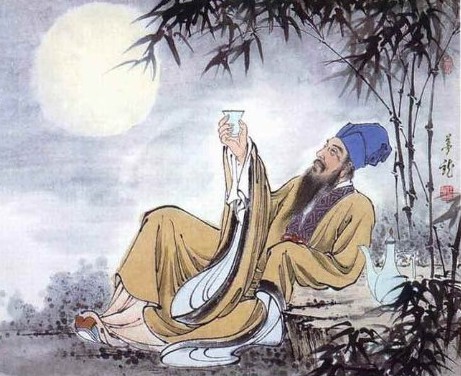
 【詩人簡介】:苏轼(1037年—1101年),字子瞻,号东坡居士,世称苏东坡。眉州眉山(今四川省眉山市)人,北宋文学家,书法家、画家,历史治水名人。 与父苏洵、弟苏辙三人并称“三苏”。
嘉祐二年(1057年),参加殿试,赐进士及第 。宋神宗时,曾在杭州地任职。宋哲宗即位后,出任兵部尚书、礼部尚书等职。随着新党执政,又被贬惠州、儋州。宋徽宗时,获赦北还,病逝于常州。南宋时期,追赠太师,谥号“文忠”。
苏轼是北宋中期文坛领袖,在诗、词、文、书、画等方面取得很高成就。其诗题材广阔,清新豪健,善用夸张比喻,独具风格。其词开豪放一派,;其文著述宏富,纵横恣肆,豪放自如,与韩愈、柳宗元、欧阳修、苏洵、苏辙、王安石、曾巩合称“唐宋八大家”;作品有《东坡七集》《东坡易传》《东坡乐府》《寒食帖》《潇湘竹石图》《枯木怪石图》等。 【詩人簡介】:苏轼(1037年—1101年),字子瞻,号东坡居士,世称苏东坡。眉州眉山(今四川省眉山市)人,北宋文学家,书法家、画家,历史治水名人。 与父苏洵、弟苏辙三人并称“三苏”。
嘉祐二年(1057年),参加殿试,赐进士及第 。宋神宗时,曾在杭州地任职。宋哲宗即位后,出任兵部尚书、礼部尚书等职。随着新党执政,又被贬惠州、儋州。宋徽宗时,获赦北还,病逝于常州。南宋时期,追赠太师,谥号“文忠”。
苏轼是北宋中期文坛领袖,在诗、词、文、书、画等方面取得很高成就。其诗题材广阔,清新豪健,善用夸张比喻,独具风格。其词开豪放一派,;其文著述宏富,纵横恣肆,豪放自如,与韩愈、柳宗元、欧阳修、苏洵、苏辙、王安石、曾巩合称“唐宋八大家”;作品有《东坡七集》《东坡易传》《东坡乐府》《寒食帖》《潇湘竹石图》《枯木怪石图》等。
Introduction to the poet:
Su Shi (1037–1101), courtesy name Zizhan, literary sobriquet Dongpo Jushi (“Layman of the Eastern Slope”), is commonly known as Su Dongpo. He was a native of Meishan in Meizhou (present-day Meishan, Sichuan Province). A leading literary figure of the Northern Song dynasty, Su Shi was also an accomplished calligrapher, painter, and renowned expert in hydraulic engineering. Together with his father Su Xun and his younger brother Su Zhe, he is collectively known as “the Three Sus” (San Su).
In the second year of the Jiayou reign (1057), Su Shi passed the palace examination and was awarded the jinshi degree. During the reign of Emperor Shenzong, he held official posts in Hangzhou. After Emperor Zhezong ascended the throne, Su Shi served successively as Minister of War and Minister of Rites. With the rise of the New Policies faction, however, he was again demoted and exiled to Huizhou and later Danzhou. During the reign of Emperor Huizong, he was granted amnesty and allowed to return north, but he fell ill and died in Changzhou. In the Southern Song period, he was posthumously honored with the title Grand Preceptor (Taishi) and given the posthumous name “Wenzhong.”
Su Shi was the foremost literary leader of the mid–Northern Song period and achieved outstanding accomplishments in poetry, ci lyric poetry, prose, calligraphy, and painting. His poetry is notable for its wide-ranging themes, fresh yet vigorous style, and skillful use of hyperbole and metaphor, forming a distinctive personal voice. His ci poetry pioneered the bold and unrestrained (haofang) style. His prose is extensive, expansive in vision, free-flowing, and powerful. Together with Han Yu, Liu Zongyuan, Ouyang Xiu, Su Xun, Su Zhe, Wang Anshi, and Zeng Gong, he is counted among the “Eight Great Masters of the Tang and Song Dynasties.”
His major works include The Seven Collections of Dongpo, Dongpo’s Commentary on the Book of Changes, Dongpo’s Lyric Anthology, as well as celebrated calligraphic and pictorial works such as Cold Food Festival Calligraphy, Bamboo and Rocks of the Xiao and Xiang Rivers, and Withered Tree and Strange Rocks.

|