


|
|
|
|---|
 |
 |
 |
 |
 |
|
 |
|---|
【詩人簡介】見本書“勉 女 权 歌”。 Introduction to the poet: See "Song of Women's Rights" in this book. 【附文】 秋風秋雨愁煞人 秋瑾就義百年祭(2007年07月16日)
“當大街上隻剩下最后一個革命者,這個革命者必定是女性。”這是共產國際女領導人盧森堡的名言。巾幗不讓須眉,女人對自己的信仰,更堅貞,更執著。 我們熟知的女烈士,如趙一曼、投江八女、江姐、劉胡蘭、楊開慧等,都是女中之豪杰。但作為中國近代女革命家,首先要數秋瑾。秋瑾比盧森堡小4歲,卻比她早犧牲12年。 今年7月15日,是秋瑾就義百年忌日。一個世紀過去了,中國發生何等天翻地覆的變化!但秋瑾為了追求祖國富強,而赴湯蹈火的大無畏精神,她那種大義凜然,寧願犧牲自己也要喚醒民眾的革命意志,依然在支撐著我們民族的靈魂。 秋瑾的身世,大家已十分熟悉。隻是她犧牲前的情景,正如盧森堡所描繪的。那是1907年春,她回到紹興主持大通學堂,同徐錫麟秘密組織“光復軍”,准備相繼在安慶與紹興舉行武裝起義。7月6日,徐錫麟在安慶起義中失敗犧牲,其弟徐偉供出秋瑾。10日秋瑾得知消息,明白清政府馬上要來追捕,眾人勸她速離紹興,但她卻把所有同志安排撤離,唯自己獨自一人,孤守在大通學堂。她說:“革命要流血才能成功。”用行動實現自己加入“同盟會”時許下的諾言:“危局如斯敢惜身?願將生命作犧牲。” 7月13日下午,政府軍把大通學堂圍得水泄不通。但正如盧森堡所言,大通學堂“隻剩下最后一個革命者,”這個革命者果然是女性,她就是秋瑾。被捕后經三次過堂審訊,她未作任何口供,僅揮毫書下:“秋風秋雨愁煞人”七個大字。表達一位女革命家憂國憂民,壯志未酬,面對死亡的悲憤心情。這七個字,是秋瑾引用清代詩人陶澹如的詩句。全詩為:“籬前黃菊未開花,寂寞清樽冷懷抱。秋風秋雨愁煞人,寒宵獨坐心如搗。” 1907年7月15日(農歷六月初六)凌晨,秋瑾被押到紹興軒亭口刑場,她目別祖國藍天,慷慨就義,年僅31歲。她以一腔熱血,終於喚醒了中華民族。僅4年后,辛亥革命的炮火,就響遍武昌城頭。連綿幾千年的封建王朝,終成歷史。秋瑾一生還留下許多著作,包括120多首詩,38首詞。她以天下為己任,大義凜然,氣勢豪邁,文詞朗麗高亢,音節嘹亮。為了普及革命,她還寫過白話文,譜歌曲,甚至編彈詞,來向廣大群眾傳播革命的道理。這些皆收於《秋瑾集》中。 這件事又引起清政府的恐慌,忙勒令把墓遷走。烈士靈柩又被運到紹興,后又送回湖南湘潭。辛亥革命成功,1912年元旦成立中華民國后,才把秋瑾靈柩由湖南運送到上海。舉行了隆重的追悼大會,然后用火車護送到杭州,重新安葬於西泠橋下。1931年孫中山到杭州,親自赴秋瑾墓致祭,並題寫“巾幗英雄”之匾額。荒唐的是“文革”除“四舊”時,居然又把烈士遺骸當作“四舊”,遷至杭州雞籠山中。直到1981年,才復葬於原址。如今在岳飛墓旁,西泠印社前,人們可看到墓址上秋瑾的立像,她凝視著祖國的大好河山,心中定會涌起欣慰的波瀾。 秋瑾就義已經百年,世事滄桑,當今中國已不再是血與火的革命斗爭年代。但秋瑾的精神,依然具有時代意義。 首先,她那種憂民憂國,為了祖國獨立富強,不惜犧牲個人生命,用鮮血來喚醒民眾,就是一種熾熱的愛國主義精神。當今我們在發展的征途中,同樣充滿困難與風險,必須居安思危,充滿憂患意識。因此,我們需要弘揚這種以愛國主義為核心的民族精神。 第三,她面對腐朽沒落的社會,滿腔熱血,一身正氣。為求得社會正義而奔走呼號,直至從容就義。她的女俠氣概,就是正義的化身。當前,我們同樣要把社會正義,作為社會主義國家的首要價值。現實社會中,仍存在陽光下的黑暗,有些邪惡勢力和腐敗現象仍在滋長。我們就應學習秋瑾這種見義勇為的大無畏精神,為弘揚社會正義,勇於斗爭,敢於獻身。 因此,秋瑾依然是我們精神家園中一顆璀璨的明珠,永遠閃耀著時代光芒。 【Attachment】 Autumn Winds and Autumn Rains Bring Boundless Sorrow — Centennial Commemoration of Qiu Jin’s Martyrdom "When only the last revolutionary remains on the street, that revolutionary will surely be a woman.” This was a famous remark by Rosa Luxemburg, the female leader of the Communist International. Women, no less than men, have shown that when it comes to their faith, they can be even more steadfast and unyielding. The heroines we know well—Zhao Yiman, the Eight Women Who Threw Themselves into the River, Sister Jiang, Liu Hulan, Yang Kaihui, and others—were all extraordinary figures. But when it comes to modern women revolutionaries in China, the foremost must be Qiu Jin. She was four years younger than Luxemburg, yet gave her life twelve years earlier. July 15 this year marked the centenary of Qiu Jin’s martyrdom. A full century has passed, and China has undergone earthshaking changes. Yet the fearless spirit with which Qiu Jin braved fire and water for the sake of her nation’s strength and prosperity—her noble righteousness, her willingness to sacrifice herself to awaken the people’s revolutionary will—still sustains the soul of our nation. Qiu Jin’s background is already well known, but the circumstances of her sacrifice recall exactly Luxemburg’s words. In the spring of 1907, she returned to Shaoxing to head the Datong School, and together with Xu Xilin secretly organized the “Restoration Army,” preparing armed uprisings in Anqing and Shaoxing. On July 6, Xu Xilin was defeated and killed in the Anqing uprising, and his brother Xu Wei betrayed Qiu Jin. On July 10, when she learned the news, she knew the Qing authorities would soon come to arrest her. Friends urged her to flee Shaoxing, but instead she arranged for all her comrades to withdraw, while she alone held her ground at the Datong School. She declared: “Revolution requires blood before it can succeed.” With her actions, she fulfilled the pledge she made upon joining the Tongmenghui: “In such perilous times, how could I shrink from death? Gladly will I offer up my life in sacrifice.” On the afternoon of July 13, government troops completely surrounded Datong School. But just as Rosa Luxemburg once said, "when there is only one revolutionary left,” that revolutionary turned out to be a woman—Qiu Jin. After being arrested, she underwent three interrogations but never gave a confession. Instead, she boldly wrote seven large characters: “Autumn winds, autumn rains, bring me boundless sorrow.” In them, she expressed the anguish of a woman revolutionary, grieving for her country and its people, her great aspirations unfulfilled, and facing death with grief and indignation. These seven words were a line borrowed from a poem by the Qing dynasty poet Tao Danru. The full poem reads:
At dawn on July 15, 1907 (the sixth day of the sixth lunar month in lunar calendar), Qiu Jin was taken to the execution ground at Xuantingkou in Shaoxing. She bid farewell to her country’s blue skies and met death with heroic dignity at the age of only 31. With her blood she helped awaken the Chinese nation. Merely four years later, the guns of the 1911 Revolution thundered in Wuchang, toppling the feudal dynasty of millennia. Qiu Jin also left behind many writings: over 120 poems and 38 ci-lyrics. Taking the fate of the nation as her own responsibility, her works are imbued with heroic spirit, upright integrity, and soaring, resonant language. In order to popularize revolution, she even wrote in vernacular prose, composed songs, and created Pingtan ballads to spread revolutionary ideas among the masses. These works are collected in The Complete Works of Qiu Jin. After her death, her body was hastily buried at Wolong Mountain outside Shaoxing. Later her elder brother hired people to move the coffin for temporary storage at Yanjia Pond. The next year, her close friends Xu Baihua and Wu Zhiying transferred it to Hangzhou. On February 25, 1908, she was buried by West Lake at Xiling Bridge on Solitary Hill, with a gravestone and inscription. This fulfilled her own wish, once expressed while visiting Yue Fei’s tomb at West Lake—that if she could be buried there after death, she would have no regrets. The Qing government, alarmed, soon ordered the grave moved. Her remains were shifted back to Shaoxing, then later to Xiangtan in Hunan. After the success of the 1911 Revolution and the founding of the Republic of China on New Year’s Day 1912, her coffin was brought to Shanghai. A grand memorial service was held, then the remains were escorted by train back to Hangzhou and reburied beneath Xiling Bridge. In 1931, Sun Yat-sen visited Hangzhou, personally paid homage at her tomb, and inscribed a plaque reading “Heroine.” Tragically, during the Cultural Revolution’s campaign to “Smash the Four Olds,” even her remains were treated as “old,” and moved to Jilong Mountain in Hangzhou. Not until 1981 were they reinterred at their original site.
A hundred years have passed since Qiu Jin’s martyrdom. Though the world has changed and today’s China is no longer an era of revolution through blood and fire, her spirit still bears great significance. First, her concern for the people and the nation, her willingness to sacrifice her life for independence and prosperity of the nation, and her use of blood to awaken the masses embody a burning patriotism. In today’s path of development, filled with challenges and risks, we too must remain vigilant and conscious of potential dangers. Thus we must continue to carry forward this national spirit with patriotism at its core. Second,a hundred years ago in old China, the dark rule of feudal ethical codes was so obstinate, yet Qiu Jin, as a woman, dared to break through mental shackles, shatter the fetters of feudal tradition, pursue truth and light, advocate for republicanism, and insist on gender equality. Her courage to liberate herself from old thoughts and customs was a bold movement of ideological emancipation. Today we also must continue to free our minds. Hence, we should learn from Qiu Jin and promote the spirit of reform and innovation as the hallmark of our times. Third, facing a corrupt and decaying society, she was filled with righteous passion and moral integrity. For the cause of social justice she shouted and fought, and finally met death calmly. Her heroic chivalry was the very embodiment of justice. Today as well, social justice must be the foremost value of a socialist state. In today’s society, there is still darkness beneath the sunlight, with certain evil forces and corrupt practices continuing to spread. We should learn from Qiu Jin’s fearless spirit of stepping forward in the face of injustice, upholding social justice, daring to struggle, and being willing to sacrifice. For this reason, Qiu Jin remains a shining pearl in our spiritual homeland, forever radiating the light of the times.
|
|
|---|
| Contact 联系 | Last Revised
09/28/2025
| |
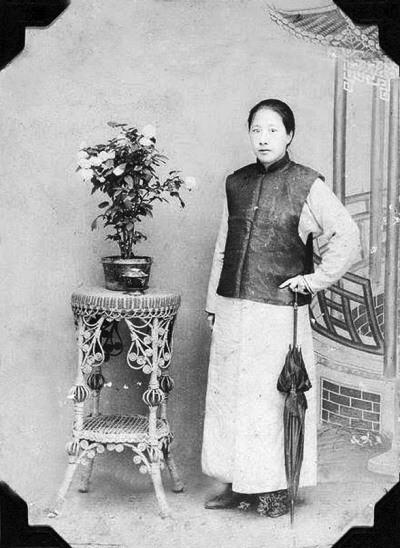
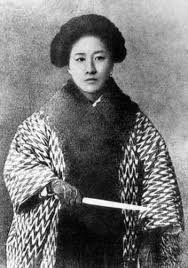 秋瑾犧牲后,遺體被草埋於紹興臥龍山下。后來他哥哥雇人,把靈柩寄存在嚴家潭。第二年初,她的好友徐白華及吳芝瑛等,將靈柩運至杭州,於2月25日葬在西湖孤山的西泠橋畔,並做了墓碑,寫了墓表。這是因為當年秋瑾與友人游西湖,在憑吊岳飛墓時,曾感言自己生后,若能埋於此地,將終身無憾。人們就是為了實現她“願埋骨西泠”的遺言。
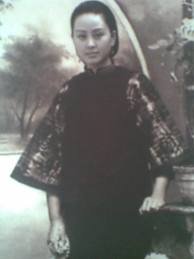 其次,百年前舊中國,封建禮教思想的黑暗統治是那樣頑固。她作為一個弱女子,敢於如此沖破思想牢籠,打碎封建精神枷鎖,去崇仰真理,追求光明,主張共和,堅持男女平等。這種敢於把自己從舊思想、舊習慣中解脫出來,是一種大膽革新的思想解放運動。當今,我們同樣仍需不斷解放思想。因此我們要學習秋瑾,弘揚以改革創新為核心的時代精神。
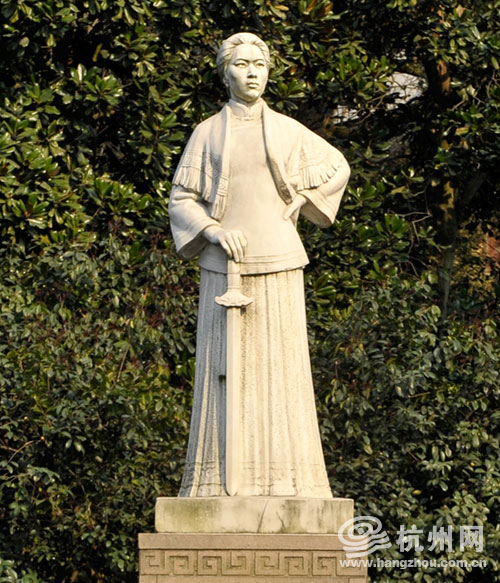 Today, near Yue Fei’s tomb and in front of the Xiling Seal Society, one can see her statue at the grave site—gazing out upon her beloved land, surely her spirit stirs with comfort and pride.
.jpg)
